EcofinEconomics · Nobel 2026
When the Future Moves First
The 2026 economics Nobel went to Robert Hall and Michael Woodford. Their work explains why a promise about interest rates can change my decisions before the rates themselves move.
I. A Decision Nobody Asked Me to Make
On the evening of Wednesday, October 14, 2026, I had two windows open side by side.
On the left was a loan offer from a bank to Moc Coffee, the small Saigon roastery and café I used as a running example in my essay on the quantitative modeling paradox. The loan would fund the large-capacity roaster the café had long been weighing: fixed for the first twelve months, then floating at the deposit rate plus a margin, repaid over five years.
On the right was the Royal Swedish Academy of Sciences' announcement from two days earlier. The 2026 prize in economic sciences had gone to Robert E. Hall of Stanford and Michael Woodford of Columbia, "for microeconomic foundations of macroeconomic stabilisation."
Around half past seven in the evening, Saigon time, the U.S. September inflation print came out hotter than expected. The two-year Treasury yield jumped within minutes. The dollar firmed a little.
Nothing on the loan offer changed. The State Bank of Vietnam had not moved its policy rate. The Fed had not met. No one was asking me to decide anything that night.
And yet the decision had already started to move.
In my head, the path of interest rates behind those four floating years had shifted up a notch. No official number had changed. Only what I believed would happen had changed, and that alone was enough for me to put the pen down.
I realized I was doing exactly what the two new laureates spent their careers modeling: a person looking ahead, updating expectations as news arrives, and changing today's decision because of a future that has not happened yet. And like most people, that decision was also fenced in by something very plain: how much cash the café had to wait with.
This essay is how I read this year's prize. Not from a lecture hall, but from the seat of someone who runs models in Stata every day and has to turn their output into decisions with real money attached. To see why Hall and Woodford matter, we need to go back almost a century, to the moment economics was first forced to answer a painfully ordinary question: if the factories are still standing and the workers are still willing, why does nobody have a job?
This year's prize does not honor a correct forecast. It honors a way of asking questions: who is changing their decisions, because of what they believe, and within what limits.
- 1929Stock market crash
- 1933U.S. unemployment near 25%
- 1936Keynes publishes the General Theory
- 1946Employment Act
- 1958Phillips: low unemployment, faster wage growth
- 1968Friedman: no permanent trade-off
- 1973Oil embargo, oil price nearly quadruples
- 1976The Lucas critique
- 1978HALL: consumption as a near random walk
- 1979Volcker becomes Fed Chair
- 1983Calvo: staggered price setting
- 2003WOODFORD: Interest and Prices; Eggertsson–Woodford on the zero bound
- 2008Lehman fails, Fed cuts to 0–0.25%
- 2011Fed signals low rates “at least through mid-2013”
- 2020Pandemic: a supply shock that drags demand down
- 2022U.S. CPI inflation peaks near 9%
- 2026Fed Chair Warsh drops forward guidance; Oct 12 Nobel to Hall and Woodford
II. When Everyone Waits: Keynes and the Question of Who Spends First
In February 1931, hundreds of men lined up outside a free soup kitchen in Chicago. Felt hats, heavy coats, faces turned toward the same door. None of them had lost their skills to a war. The factories were still there. The machines were still there. The orders were not.
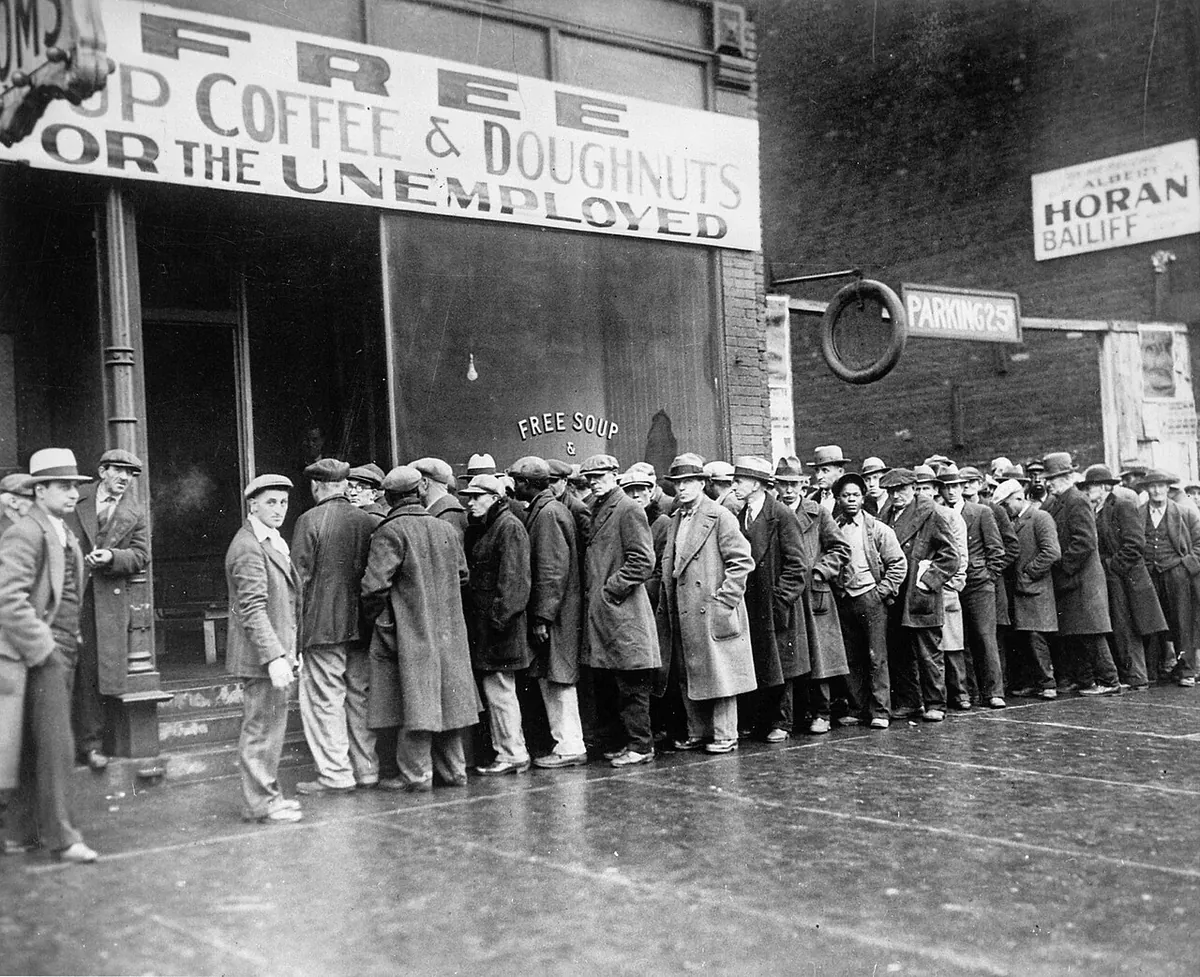
By 1933, roughly a quarter of the American labor force was out of work, and real output had fallen by about a quarter from its 1929 level.
Classical economics had a tidy answer: wait. Wages will fall, prices will fall, interest rates will fall, and at some point hiring will pay again. Markets clear.
The trouble was that everyone was waiting.
Drop Moc Coffee into 1931 and the chain of waiting becomes painfully visible. The factory worker waits for a steady job before treating himself to a coffee. The owner waits for a fuller room before hiring another barista. The plant across the street waits for sales before adding a shift. The bank waits for borrowers to look healthier before extending credit. Each of them is being sensible. Together, they freeze the economy.
John Maynard Keynes saw the trap. In The General Theory of Employment, Interest and Money (1936), he argued that firms do not hire simply because labor is cheap; they hire because they expect to sell the extra output. When that expectation collapses, no wage is low enough to persuade a half-empty café to take on staff. The problem is not that costs are too high. It is that nobody believes the customers will come.
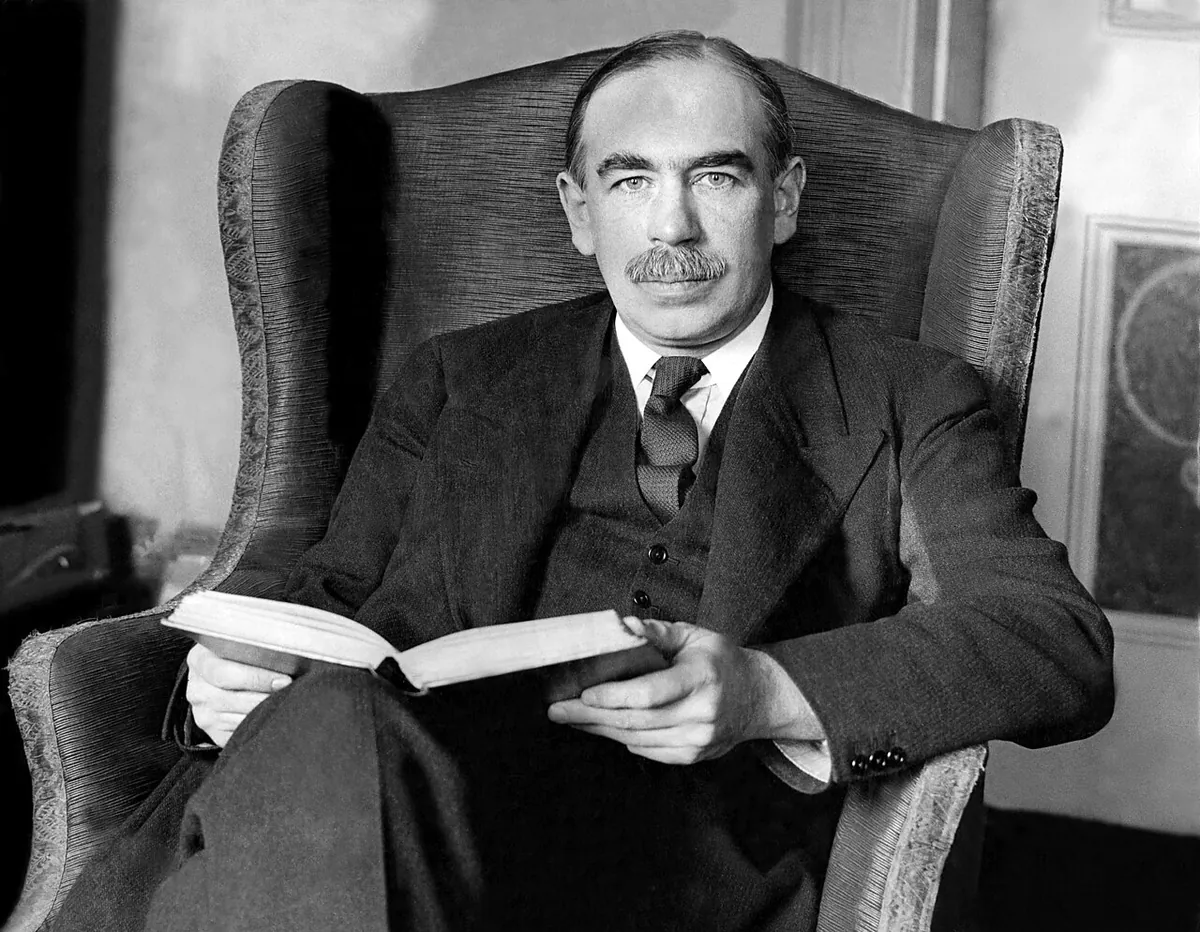
Keynes's answer was blunt: when the private sector shrinks all at once, someone has to spend first. The state hires workers to fix a road. The worker gets paid and stops by for a coffee. The café keeps its barista and orders more beans. The barista and the bean supplier now have more income to spend elsewhere. One person's spending becomes another person's income. That is the spending multiplier.
If everyone spends 75% of each extra dong they earn, 100 million dong of initial public spending can generate 400 million dong of output over successive rounds: 100 + 75 + 56 + 42 + ..., or more compactly, ΔY = ΔG / (1 − c). Drag the slider below to see how sensitive that number is to c.
I have run enough models to know what an equation this elegant hides. The c in the formula is a constant. In real life it is millions of decisions made by very different people. The worker who just cleared his debts may spend nearly all of it. The one afraid of losing her job next month may save nearly all of it. The café owner who owes the bank may use the extra cash to pay interest rather than to buy more beans.
In 1933, Irving Fisher described a crueler mechanism still, debt deflation: when prices fall, the real burden of debt rises. A café that owes 500 million dong still owes 500 million dong when its revenue halves. For a borrower, waiting for prices to fall so the market can heal itself may mean going bankrupt before the customers return.
Dorothea Lange's Migrant Mother, taken in 1936, remains the image I remember most from that era. The mother does not look at the camera. She looks at some point ahead, as if working through a sum that has no solution.
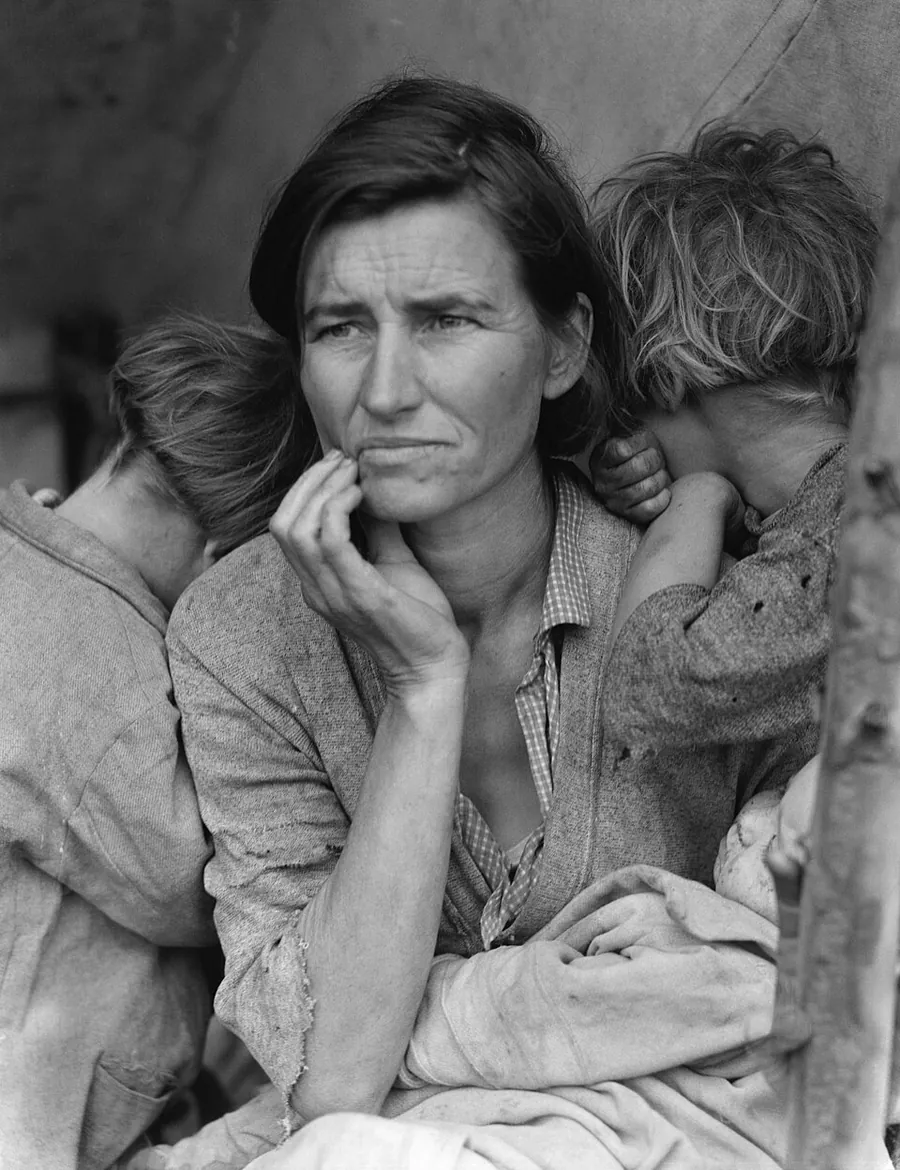
To me, it is the face of a household inside a macroeconomic model, long before macroeconomics had the tools to see her.
Keynes asked the right question. But it would take economists nearly fifty more years to build the tools for its hardest part: where does that c come from, and how does it change when policy changes?
III. The Menu Torn Up: From the Phillips Curve to Stagflation
After the Second World War, America had no wish to see those soup-kitchen lines again. The Employment Act of 1946 charged the federal government with promoting "maximum employment, production, and purchasing power." Macroeconomics entered its most self-assured era.
In 1958, A. W. Phillips published a relationship that seemed written for policymakers: across nearly a century of British data, low unemployment went with fast wage growth, and vice versa. In 1960, Paul Samuelson and Robert Solow carried the idea over to American data. The Phillips curve became a menu. Want a little less unemployment? Accept a little more inflation.
Look at the 1960s data below and you will see why people believed in that menu. From 1961 to 1969 the points slide almost neatly down a single sloping line: unemployment falls from 6.7% to 3.5% while inflation climbs from about 1% to over 5%.
Then the 1970s tore the menu in half.
Edmund Phelps in 1967, and Milton Friedman in his 1968 presidential address to the American Economic Association, had warned that the trade-off between inflation and unemployment was only temporary. The reason was expectations. A barista who gets a 5% raise is pleased until she notices that rent and food have also gone up 5%. At the next negotiation she asks for 5% plus whatever real raise she wanted. The owner sees that coming and builds the expected cost into the price of a cup. Yesterday's inflation becomes today's expectation, and today's expectation becomes today's prices.
In October 1973, an oil embargo nearly quadrupled the price of crude within months. At the end of the decade a second oil shock arrived with the Iranian revolution. On the chart above, the 1970s points no longer sit on the old line. They drift up and to the right: double-digit inflation alongside high unemployment. It came to be called stagflation.
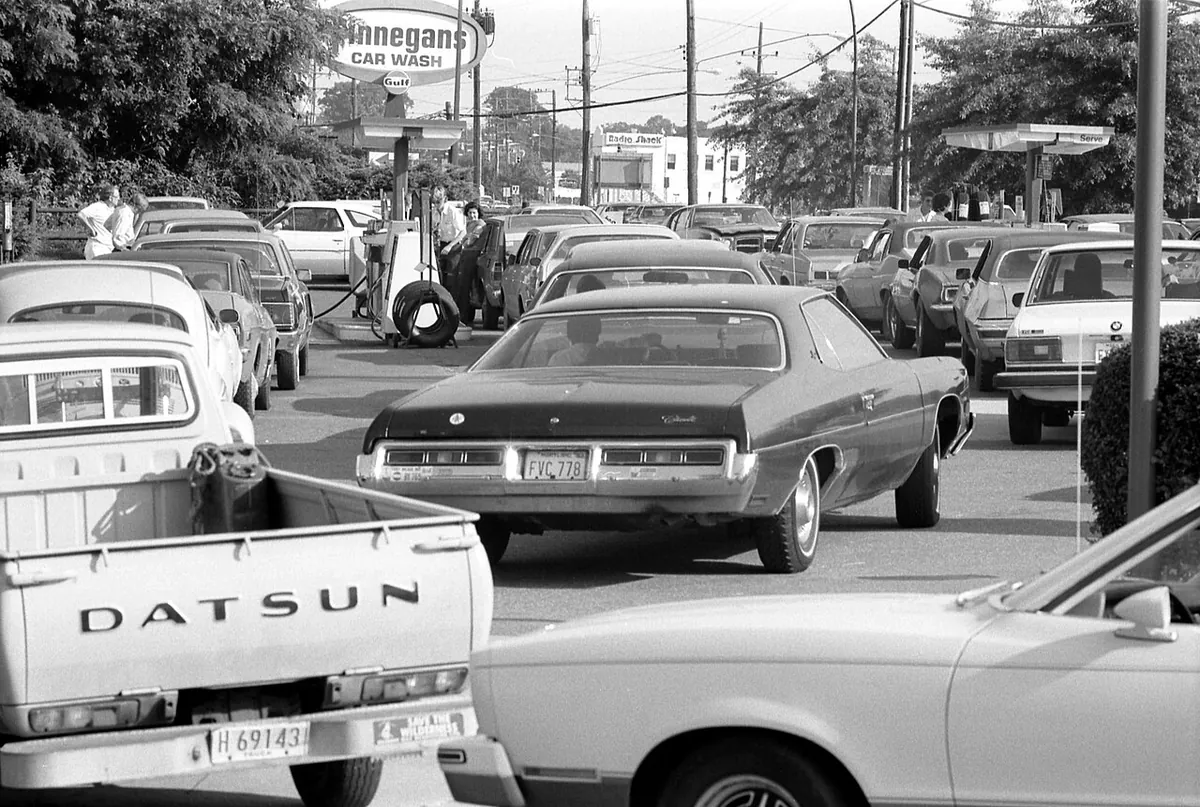
Stagflation was not only an economic shock. It was a shock to the models themselves. The vast econometric models of the 1960s, hundreds of equations estimated on past data, did not see it coming.
Fixing the mistake was expensive. In August 1979, Paul Volcker became Fed Chair and pushed the federal funds rate close to 20% at times. Inflation broke. But by late 1982 U.S. unemployment had reached 10.8%, the highest since the Great Depression era.
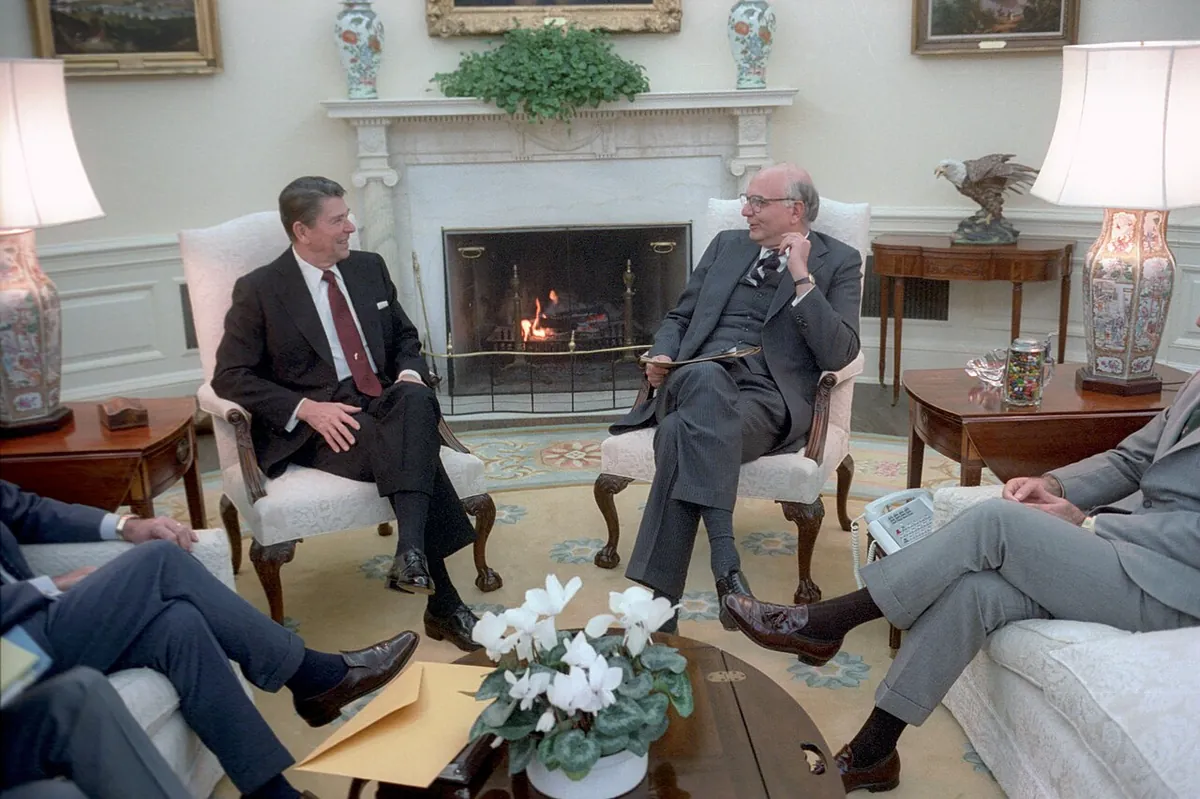
I read this period with a feeling I know well. It is what a modeler feels when a beautiful statistical relationship, high R², stable for years, suddenly snaps. In my previous essay I called it regime uncertainty. The 1970s were economics' biggest lesson in exactly that kind of uncertainty.
IV. Change the Rules, Change the Players: The Lucas Critique
In 1976, Robert Lucas wrote a paper with a dry title: Econometric Policy Evaluation: A Critique. His argument fits in one sentence: when policy changes, the way people respond changes too, so relationships estimated under the old policy cannot forecast the effects of a new one.
Suppose I estimate from three years of Moc Coffee's data that every one-point cut in the lending rate leads the café to invest an extra 50 million dong. The coefficient is stable and significant. But in those three years, rates fell because the economy was weak and everyone expected them to rise again soon. If the central bank announced a new regime of keeping rates low for a long time, the owner would reason very differently: a roaster paid off over five years would suddenly look far cheaper than the old coefficient implies. My coefficient is not wrong on the old data. It simply no longer describes people under the new rules.
That warning forced a whole generation of macro models to be torn down and rebuilt. To know what a policy will do, you have to model directly the things that do not change when policy does: preferences, technology, the budget limits of households and firms, and how they form expectations. That is what "microfoundations" means in this year's citation.
One response to Lucas, real business cycle theory, reached an almost cold conclusion: if markets clear smoothly and expectations are rational, stabilization policy has little left to do. Hall and Woodford took up Lucas's challenge differently. They built their models from forward-looking people but kept the frictions of real life: people who cannot borrow, prices that cannot adjust at once. And it is precisely in those frictions that policy finds its work again.
V. Hall: The News Arrives Before the Money
In 1978, Robert Hall published a conclusion in the Journal of Political Economy that sounds almost absurd: if consumers look ahead and use all the information they have, then the change in their consumption next period cannot be predicted by anything they already know today. Consumption follows something close to a random walk.
The logic is simple once you put a person in it. Say Moc Coffee's best barista learns in March that she will get a raise in June. If she is forward-looking and has a little saved, she starts living slightly better in March. When the raise actually lands in June, there is nothing left to adjust; that information has been in her plan for three months. The only thing that changes the plan is news, and news, by definition, cannot be foreseen.
Milton Friedman had that intuition in his 1957 permanent income hypothesis. Hall's contribution was to turn it into a test that could be confronted with data. Instead of asking "which variables predict consumption?", he asked "which variables should not be allowed to predict consumption if the theory is right?" When the data break that rule, the researcher knows exactly which assumption needs repair.
I love this way of framing a problem because it is what I try to do with my own models: not to find a model that fits the data, but to find which assumption the data are refusing.
And the data did refuse something. In 1982, Hall and Frederic Mishkin used panel data on American households and estimated that roughly 20% of consumption tracks current income rather than long-run income. Those households were not short-sighted. They simply lacked the cash to spend ahead. The barista knows her raise is coming in June, but March rent is due today and her credit card is near its limit. The future cannot pay the present's bills.
The chart separates two people that a representative-agent model would merge into one. For policy, the difference decides almost everything: given the same support package, the household with a buffer reacts when the news lands, while the hand-to-mouth household reacts when the money lands. To know whether a stimulus will work, the question is not only how much is spent, but whose hands it reaches, when they learned about it, and how far they are able to spend.
Later, Greg Kaplan and Giovanni Violante (2014) identified a harder-to-see group: the wealthy hand-to-mouth, households with a home and a pension but almost no cash on hand. In Vietnam I suspect this group is anything but small; many families hold most of their wealth in a house or a plot of land while their monthly cash flow stays thin.
Beyond the consumption test, Hall spent decades on the labor market and, since the late 1970s, has chaired the NBER's Business Cycle Dating Committee, the body that officially declares when the U.S. economy enters and leaves recession. Few people have stood closer to the question of where the economy sits in its cycle.
Hall taught me that people do not react to money. They react to news. But only those with enough money can afford to act on the news.
VI. Woodford: When a Promise Becomes a Policy Tool
If Hall started with the buyer, Woodford asked about the seller, and about the party standing between them: the central bank.
Go back to Moc Coffee's counter. The owner reprints the menu every six months. Bean prices rise today, but the price of a cup cannot change right away: the menu is printed, regulars will grumble, the café next door has not raised its prices. In 1983, Guillermo Calvo built exactly that delay into a model: each period, only some firms get to reset their prices. The consequence sounds small but runs deep. When a seller does get the chance to reprice, she must account for costs and demand over the entire stretch until the next chance. Sellers have to look ahead too.
In Interest and Prices (2003), Woodford assembled these pieces, from his own research and that of others such as Julio Rotemberg, Richard Clarida, Jordi Galí, and Mark Gertler, into a framework that nearly every major central bank now uses in some form. Its simplest version comes down to three equations for three decisions:
- Households decide whether to spend or save, based on expected income and the real interest rate (the IS curve).
- Firms decide what price to set, based on costs and expected inflation (the New Keynesian Phillips curve).
- The central bank decides the interest rate, responding to inflation and the output gap (the interest-rate rule).
The most important part of the diagram is not the three boxes but the one in the middle. All three equations contain expectations about the future. Households spend today according to the income and interest rates they believe are coming. Firms price today according to the inflation they believe is coming. And what they believe depends on what they think the central bank will do.
So the rate that actually bites is not the number on the bank's display board but the expected real rate: the nominal rate minus the inflation people anticipate. Whether that rate is tight or loose depends on where it sits relative to the natural rate, usually written r*, the real rate that would keep the economy balanced if prices were fully flexible.
One consequence that many business owners miss: a central bank can tighten while standing still. Hold the policy rate at 3.75%, and if expected inflation slips from 2.5% to 2%, the real rate rises from 1.25% to 1.75%. Nobody pressed a button, yet policy is 50 basis points tighter. Try it with the calculator below.
Woodford's framework also captures something a small business like Moc Coffee feels in its bones: falling output does not always mean too little demand. The right benchmark is not yesterday's output but natural output, the level the economy would reach if prices were flexible. A café that is quiet because customers are holding back and a café that is quiet because it cannot buy beans have two different illnesses and need two different prescriptions.
Then comes the contribution most closely tied to Woodford's name: forward guidance. In 2003, with Gauti Eggertsson, he analyzed a central bank's hardest situation: rates already at zero, with no room to cut. Their conclusion was that the most powerful tool left is a promise. If the central bank credibly commits to keeping rates low for longer than the recovery alone would require, expectations about the future pull long-term rates down today.
For Moc Coffee the mechanism is concrete. A roaster financed over five years is not priced off this month's rate but off the path of rates across all five years. If markets believe rates will stay low for longer, long-term yields fall immediately, the cost of the loan falls immediately, and the decision to buy can change immediately, before the central bank cuts by a single basis point.
On August 9, 2011, the Fed put a date in its statement for the first time: economic conditions were likely to warrant exceptionally low rates "at least through mid-2013." The promise had become an official policy instrument.
Woodford turned expectations from something a central bank has to guess into something it can shape. Words, if credible, are policy too.
VII. When the Models Walked Into Real Crises
On September 15, 2008, Lehman Brothers filed for bankruptcy. Three months later the Fed cut rates to 0 to 0.25%. By the textbook, cheap money should have coaxed people back into borrowing and spending. But a family that has just watched its house lose value, with the mortgage still intact and the job in doubt, does not borrow more to buy a new car. It pays down debt. And the banks, nursing enormous losses, did not want to lend either.
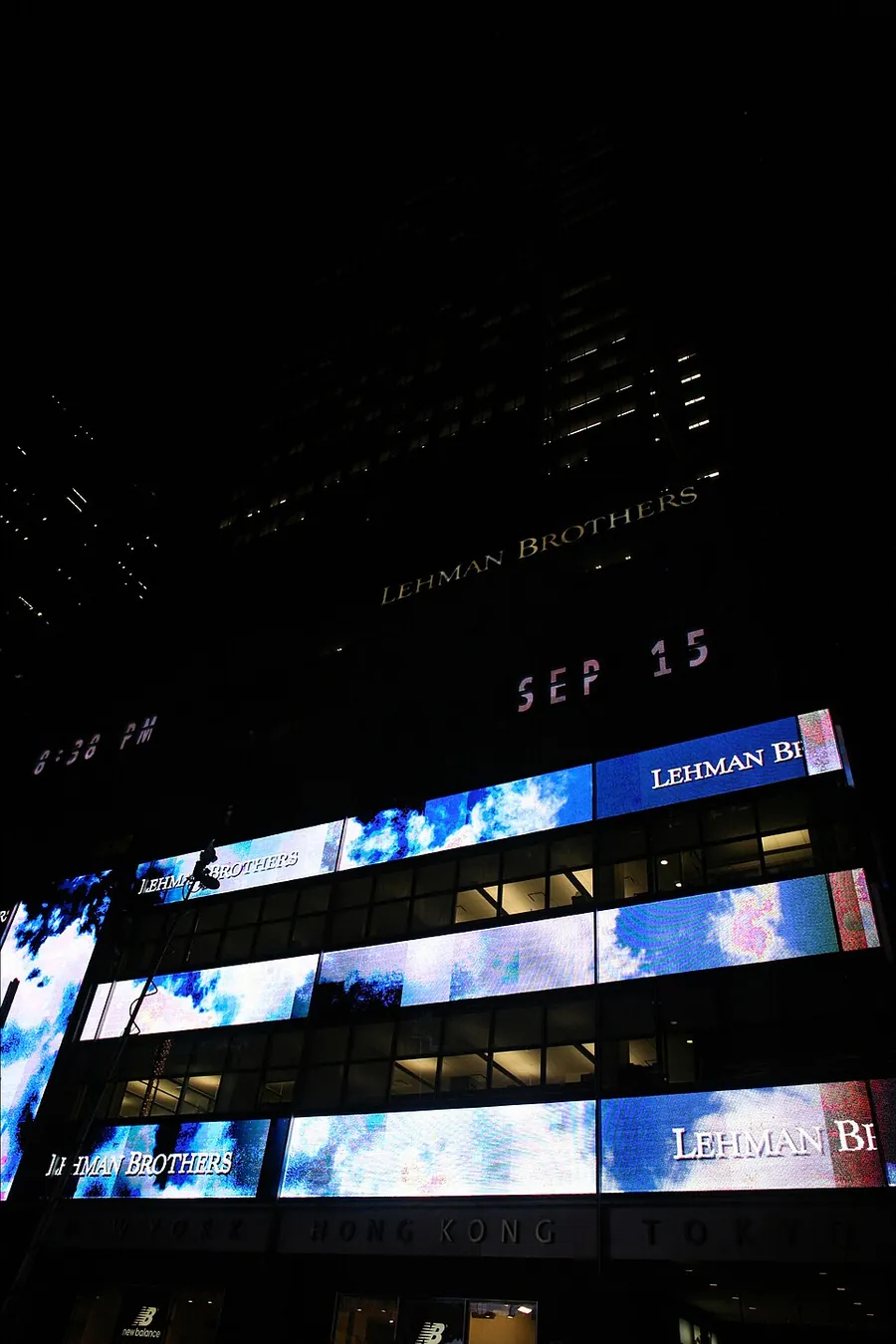
This is where Hall's question became most practical: to understand spending, you need to know how each household's balance sheet has changed. It is also where the biggest blind spot of the New Keynesian models of that time showed itself. They treated the financial system as a nearly frictionless pipe. In 2008 the pipe clogged.
2020 brought a different kind of shock. Hotels, restaurants, and cinemas closed for public-health reasons, and low interest rates could not reopen a hotel. But Veronica Guerrieri, Guido Lorenzoni, Ludwig Straub, and Iván Werning showed that a shock starting on the supply side can drag down demand if workers in the shuttered sectors lose income with nothing to replace it. They called these Keynesian supply shocks. The hotel employee who loses her job stops coming to Moc Coffee. The café is open, has beans, has baristas, and still loses customers. Income support at that moment is not only about rescuing the recipient; it is about stopping the shock from spreading to sectors that are still working.
Then came 2021 to 2023, the biggest test yet of the ideas about expectations. U.S. inflation reached about 9% in mid-2022, a forty-year high. Memories of Volcker returned: would America have to pay with double-digit unemployment again?
The answer, at least so far, was no. Between mid-2022 and mid-2023, inflation fell from about 9% to about 3% while unemployment barely moved, hovering around 3.5 to 3.7%. Compared with 1980 to 1982, when unemployment reached 10.8%, the price tag was entirely different.
There was no single reason. Supply chains unclogged, energy prices cooled, the labor market eased. But one difference, I think, is best explained by Woodford's framework: this time, long-run inflation expectations did not chase actual inflation. People and firms did not assume prices would keep rising 9% a year. The barista did not demand 9% plus a real raise; the owner did not pre-print 9% increases into the next six months of menus. When expectations stay anchored, bringing prices back under control is far cheaper.
Decades of central banks building credibility, very much in Woodford's spirit, were repaid in millions of jobs that were never lost.
VIII. Where the Models Are Still Blind
I write this as someone who leans New Keynesian. But if my previous essay had one lesson, it is that the most elegant model is still a conditional one. There are at least three places where the Hall and Woodford framework is still being challenged, and I think readers deserve to know all three.
First, promises are too powerful in the model. In standard New Keynesian models, a promise about interest rates five years out moves spending today more than a promise about next year. Marco Del Negro, Marc Giannoni, and Christina Patterson (2012) called this the forward guidance puzzle. In real life, Moc Coffee's owner is busy with a lease about to expire, a barista who just quit, and weekend foot traffic. A rate forecast five years ahead has to pass through many layers of uncertainty before it becomes a reason to buy a roaster. Alisdair McKay, Emi Nakamura, and Jón Steinsson (2016) showed that once you add liquidity-constrained households to the model, exactly the kind Hall found, the power of distant promises shrinks considerably.
Second, the people in the model are still too alike. The same rate hike forces a floating-rate borrower to cut spending at the next payment, gives a saver more interest income that may never be spent, and barely touches someone with a long fixed-rate loan. In Vietnam, where most mortgages float after a teaser period, that channel is probably faster and stronger than in the United States, where 30-year fixed mortgages are the norm. The HANK (Heterogeneous Agent New Keynesian) models of Greg Kaplan, Benjamin Moll, and Giovanni Violante (2018) are trying to put those differences at the center.
Third, the financial system. 2008 showed that a family with good income prospects can still be unable to borrow, and a firm with orders can still die when its credit line disappears. Joseph Stiglitz and others argue that the microfoundations of DSGE models oversimplified asymmetric information and financial constraints. I do not think that critique undermines the prize. But it is a reminder that microfoundations are only as good as the people we put inside them.
And there is a debate unfolding right now. Kevin Warsh, Fed Chair since this year, has said repeatedly that he will not offer forward guidance, arguing that it keeps both markets and the Fed anchored to forecasts that have gone stale. Through Woodford's lens, that is a trade-off: giving up a tool for shaping expectations in exchange for flexibility when circumstances shift. But markets never stop guessing. When the Fed goes quiet, bond buyers still have to build a rate path in their heads, and they read signals in what the Fed Chair does not say. Silence is a message too.
IX. The Signal Chain: How I Read a Macro Headline
So what does someone who does not set monetary policy, someone like me, take from this year's prize?
For me it is a habit: never stop at the headline. Whenever a macro story breaks, "Fed holds rates," "inflation beats forecasts," "State Bank injects liquidity," I make myself walk through five links before deciding what it means for my own decisions.
- 1NewsWhat just changed?
- 2ExpectationsWho updates beliefs, about what?Hall
- 3ConstraintsDo they have cash or credit to act?Hall
- 4DecisionsSpend, delay, reprice or cut shifts?Woodford
- 5Cash flowHow do my revenue and costs move?
- News: what actually changed, and is it truly new, or had the market already priced it in?
- Expectations: who will update their beliefs, and about what: next quarter's rate, next year's inflation, or their own job prospects?
- Constraints: do they have the cash or credit to act on what they now believe? This is Hall's question.
- Decisions: will they spend, delay, reprice, or cut shifts? This is Woodford's question.
- Cash flow: in the end, how do my revenues and costs move, and when?
Run the chain on that October 14 evening at Moc Coffee. News: U.S. September inflation came in above forecast. Expectations: markets pushed back the date the Fed might ease, and the dollar strengthened. Constraints: for Vietnam, a stronger dollar means pressure on the exchange rate, leaving the State Bank less room to keep domestic rates low indefinitely. Decisions: commercial banks, which price floating loans off their deposit rates, become more cautious about cutting what they pay savers. Cash flow: the floating portion of the roaster loan, after the first twelve months, is now more likely to cost more than the scenario I built a month ago.
No link here is certain. Each is a probability, in the spirit of my last essay. But having walked the whole chain, I know what to stress-test: not this month's rate, but the path of rates over the life of the loan.
I should be honest about one limit. Woodford's baseline model describes a large, relatively closed economy where the interest rate is the main tool. In Vietnam, the exchange rate, credit-growth quotas, and administrative tools carry far more weight. Transplanting the framework unchanged would repeat exactly the mistake Lucas warned against. But the original question travels intact: who is changing their decisions, because of what they believe, and within what limits.
X. Promises and Humility
I go back to the two windows. The loan offer is still there, not a single digit changed. So is the Academy's announcement.
I have not signed. Not because I know rates will rise. I do not know, nobody knows, the Fed included. I have not signed because I want to rerun the café's cash-flow model with three rate paths instead of one, and find the path on which the new roaster turns from an investment into a burden.
Over nearly a century, from the soup kitchen in Chicago to the gasoline lines of 1979, from Lehman's glowing tower to the Fed's meeting rooms today, macroeconomics has traveled a long road to understand something every café owner already feels: the future does not wait its turn. It enters today's decisions through what we believe, and it is held back by what we have.
Hall and Woodford did not give us a forecast. They gave us a way of asking questions rigorous enough to argue about policy without blind faith, whether in markets or in the state. To me, that is why this prize is deserved.
A promise about the future strong enough to make people act today, and honest enough to be revised when tomorrow turns out differently. That is what central banks are searching for, and it is what I want my own models to become.
Tomorrow the Fed may do something nobody expects. But once I know which signals I am reading and which links I am missing, I no longer need to guess. I only need to prepare.
macroeconomicsgrowth