PersonalEssay · Experience
I Wish I Could Stay in This Moment Forever
But then it wouldn't be a moment.
I. The Last One Standing
Midnight. The final shift of a grueling week of events was finally over. The stage lights snapped off, the booming music died down, and the crowd had long dissolved. Only the smell of dust in the air, the fresh paint of half dismantled backdrops, and a heavy, suffocating silence remained where intense life had pulsed just hours before.
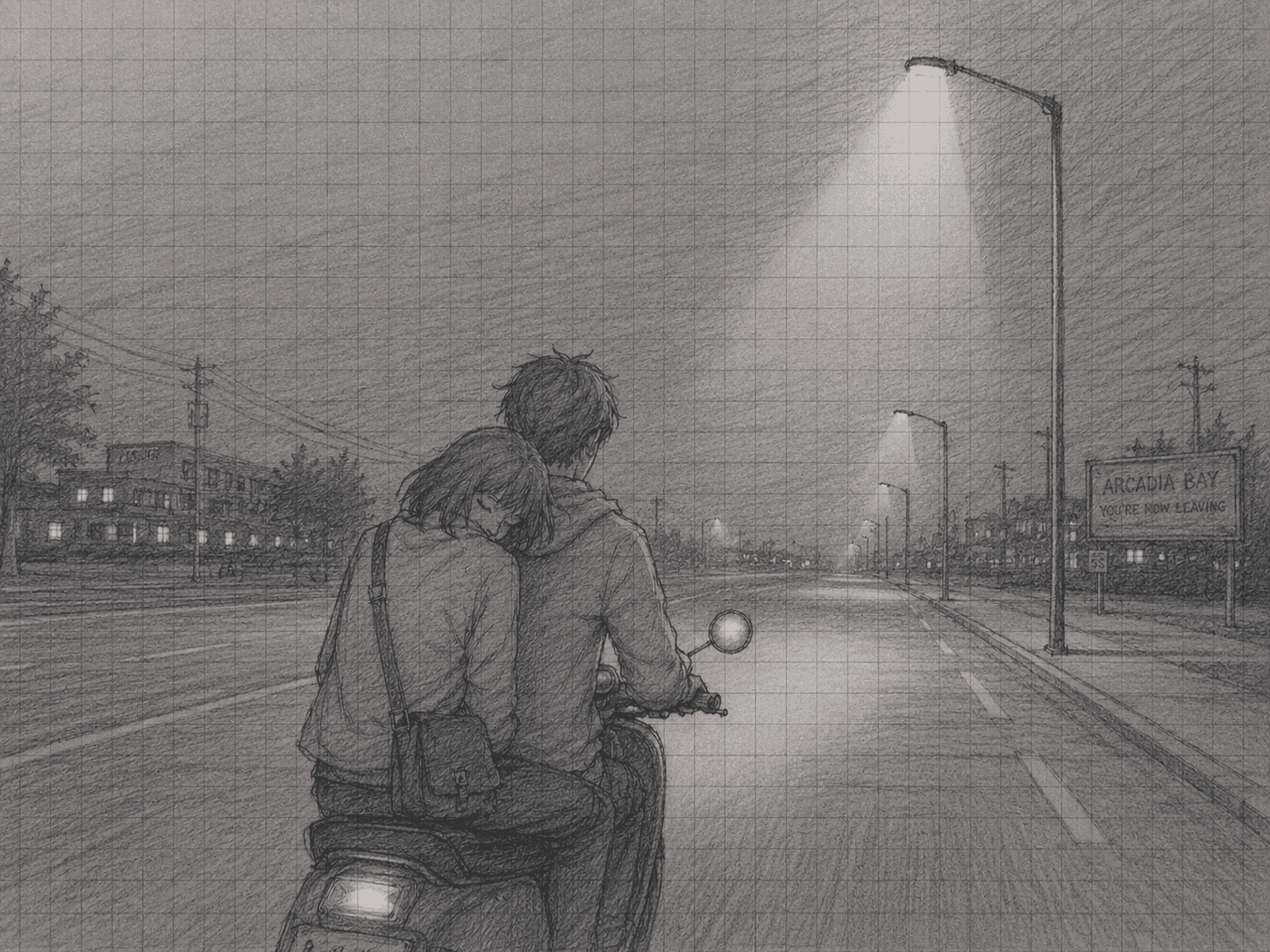
I packed up the last few storage boxes and pushed my motorcycle to the gate. As always, I was the last one to leave.
It was not because I did not feel tired. Honestly, I was completely drained. Waking up at 6 AM every day, running around managing logistics until late at night, on repeat for a week. My head was throbbing, my shoulders ached, and my body was begging for sleep. Yet a strange sensation pulled me back, a quiet reluctance that made me want to linger just a few minutes longer in the empty space.
That night, I gave a colleague a ride home.
She sat behind me, silent for the entire trip. It was not a tense silence, but the silence of two people who had spent their absolute last drop of energy, who had fought through the storm together, and who knew that after tonight, this chapter would close. The night wind cut through my jacket, and the soft yellow streetlights flickered across her shoulders. I felt her shivering slightly behind me. I knew her circumstances were much harder than mine. I was fortunate to have a home of my own, while she had to live with her aunt under a cramped roof, carrying heavy worries about daily bread, yet she never complained. She just quietly endured and strove for a brighter tomorrow.
I wanted to turn back and say, "You must be so tired. Hang in there, we are almost there."
But in the end, I chose silence. There are times when words are simply redundant. That shared, quiet understanding was the warmest comfort.
The worn out motorcycle rolled through the quiet, empty streets of Saigon. I knew with absolute certainty that this exact moment would never happen again in my lifetime. It was not cinematic. There was no swelling soundtrack, no dramatic fireworks. It was precious because it was raw. It was so real that I could smell the sweat, the cool night mist, and feel the breathing of two souls relying on each other in the dark, both holding onto a hope for tomorrow.
As soon as I got back to my room that night, I wrote a song. I just wanted to send out a simple prayer: Quietly hoping for a brighter morning, a gentler sun.
II. The Paradox of a Moment
I once stumbled upon a short quote on an old online forum. It was simple, yet it has lingered in the corners of my mind for years:
I wish I could stay in this moment forever. But then it wouldn't be a moment.
The first time I read it, I passed it by. The second time I saw it, I paused. By the third time, I realized it was talking about me.
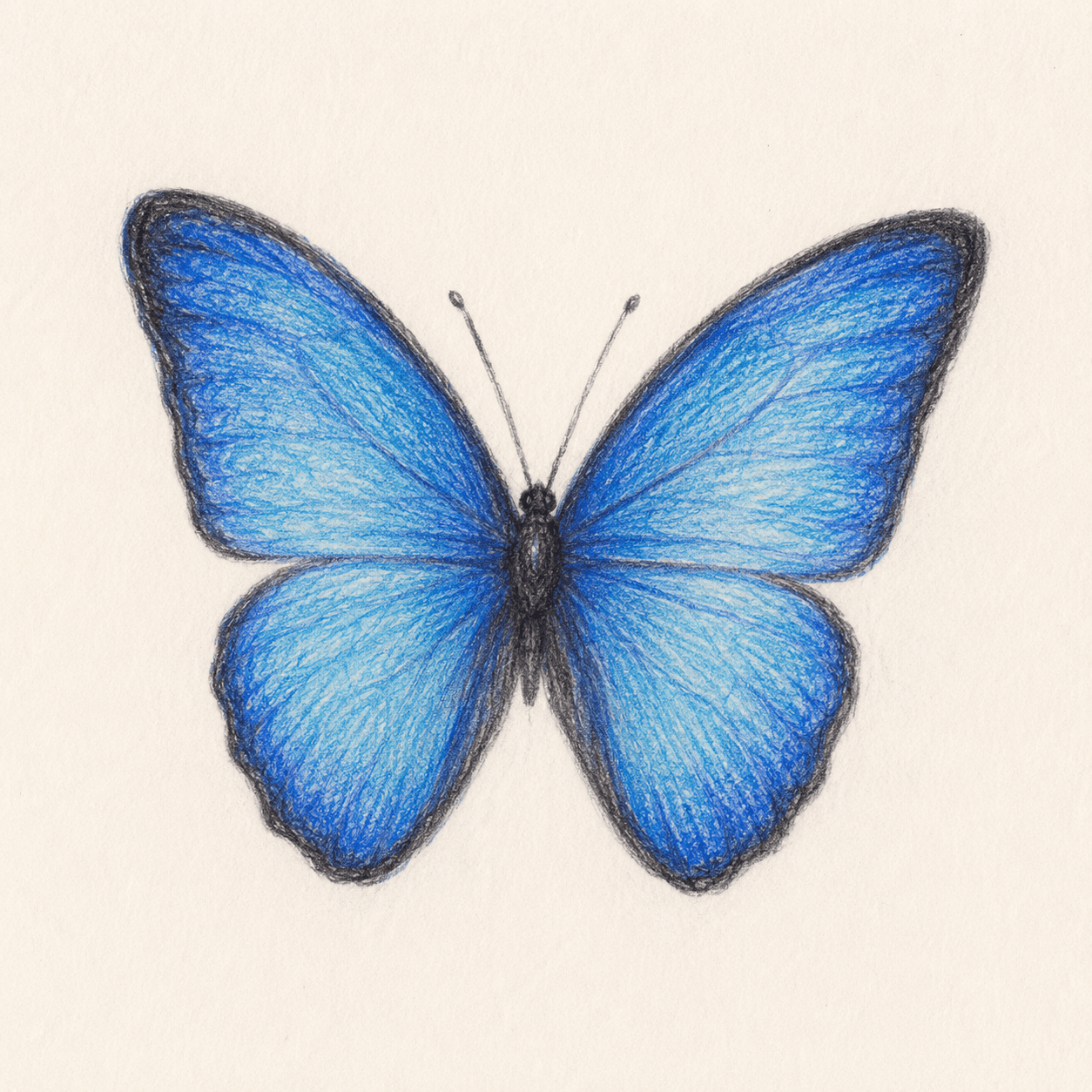
The ultimate paradox of life is that if we try to freeze a moment, we end up killing it. It is like pinning a beautiful butterfly to a wall to look at forever. You preserve the shape of its wings, but you extinguish its fragile life. A moment is beautiful precisely because it passes. It holds immense value because it is guaranteed to end. That sharp ache of regret when everything is over is the clearest proof that we were truly alive inside it.
I have always been the last one to leave. At every gathering, every road trip, and every event, I am never the one who wants to go home early. I greedily want to squeeze out the very last drop of that atmosphere and those shared laughs. I want my experiences to be absolute.
But what does it mean to be complete?
Completeness does not mean stretching a moment forever. It means accepting that even the best gatherings must end, that friends will part ways at the intersection, and that the night must eventually yield to the morning. When we wake up the next day, all that remains is a quiet space in our memory.
Within that memory, there is a strange feeling. It is not pure sadness, nor is it simple joy. It is both, tangled together.
III. Naming the Unnameable
I spent years searching for a name for this elusive feeling.
It always finds me in my quietest moments. It appears when I sit alone in my room after a chaotic day with friends, when I randomly scroll through photos of past trips, or when the melody of an old song plays. The older I get, the more frequently this feeling visits. It is as if the more experiences I gather, the heavier my emotional luggage becomes. Each memory holds a thin thread pulling me back to the past.
As it turns out, humanity has wept over this very feeling for centuries. Every culture has tried to capture it in its own unique tongue.
The Japanese speak of mono no aware (物の哀れ), which translates to the path of things or the bittersweet awareness of impermanence. It is the emotion that stirs when watching cherry blossoms drift in the spring wind. The blossom is beautiful not just for its color, but because it is about to vanish. It is a brilliant beauty on the verge of fading.
The Portuguese have saudade, a deep longing for something that is gone, or perhaps for something that never even existed. Their traditional fado music was born to sing of this exact ache. It is the feeling of families waiting on the shore for sailors who might never return, knowing the sea is vast, yet hoping anyway.
The Welsh feel hiraeth, the presence of absence. It is the joy of sweet memories and the pain of departure, woven so tightly that they cannot be separated.
The writer Vladimir Nabokov once tried to explain the Russian word toska as a sensation of spiritual anguish with no specific cause, a dull ache of the soul, a longing with nothing to long for.
No single word can fully hold this emotion. Yet the very limitation of language brings me peace.
I realize that this bittersweet ache after every experience is not a weakness. It is proof that I lived fully. My heart was open to the world, and I willingly let those moments leave a permanent mark on my soul.
Regret is not the enemy of joy. It is an affirmation that you loved something deeply enough to carry it with you.
The Research
Why do we feel both regret and happiness remembering a moment?
That paradox, smiling while your chest aches remembering a beautiful night, isn't emotional confusion. It's a psychological phenomenon that has been measured, named, and studied for over three decades.
Nostalgia, not a disease but a defense mechanism
In 1688, Johannes Hofer coined nostalgia (from Greek with nostos meaning return and algos meaning pain) and classified it as a disease. For three centuries it was seen as psychological weakness. Modern research by Constantine Sedikides (University of Southampton, 2008) reversed this entirely: nostalgia is a predominantly positive emotion serving four adaptive functions, including self-continuity, social connectedness, meaning in life, and emotional regulation.
Chart 1: The Unnamed Emotion Spectrum
Many languages have words for emotions that sit between pain and acceptance, shades that English (and Vietnamese) can't quite name. They fall along a spectrum:
Wierzbicka (1999). Emotions Across Languages and Cultures. · Sedikides et al. (2008).
Chart 2: The Peak End Rule
Psychologist Daniel Kahneman discovered a surprising rule: we don't remember experiences by their duration. Memory only snapshots two moments, the peak (highest emotional intensity) and the end. Everything between is nearly discarded.
And this is exactly why the “last to leave” person instinctively understands this. They stay until the end not out of inertia, but because they know, even without articulating it, that the ending shapes the memory. Leaving early means losing half of what memory will keep.
Kahneman et al. (1993). “When More Pain Is Preferred to Less.” Psychological Science, 4(6).
Chart 3: Experiences and Possessions
If memories matter that much, what should money buy? A study of over 1,000 people asked a simple question: “What makes you happier, an experience or a possession?”
What makes you happier?
Van Boven & Gilovich (2003). “To Do or to Have?” Journal of Personality and Social Psychology, 85(6). N>1,000.
Chart 4: Three Dimensions of Savoring
Fred Bryant (Loyola University Chicago, 2003) defined savoring, which is the capacity to attend to and prolong positive experiences, across three temporal dimensions. Each is a distinct skill:
The final piece. The “last to leave” behavior is actually an instinctive form of savoring, extending the experience to maximize all three temporal dimensions. They feel excitement before arriving (anticipatory), live fully in the moment (present), and know that when they leave, they'll carry the fullest possible memory (reminiscent). That's not clinging. That's emotional intelligence.
Bryant (2003). Savoring Beliefs Inventory. Journal of Positive Psychology. · Sedikides et al. (2008). University of Southampton.
IV. The Next Moment
I began writing these words hoping to find a clear answer, to decode this persistent and contradictory feeling once and for all, to dissect it, and to move on with a lighter heart.
However, I have come to realize that life never offers a final answer.
And perhaps the absence of an answer is the most perfect response.
This bittersweet feeling of regret and happiness is not a problem to be solved. It is simply life happening within us. It is the beautiful price we pay for daring to open our hearts to love and experience. It proves that we do not just drift through life but actively immerse ourselves in every breath of it.
None of us can turn back the hands of time, nor can we freeze a moment at will. Any attempt to do so is only a futile effort to hold onto the wind. Sometimes, the greatest courage a person can show is to smile and let the moment go.
I cannot rewind time, but I possess a gift far more precious, which is the present. The present is the only sanctuary where new memories are conceived and born.
So, I make a promise to myself:
I will still be the last one to stay at gatherings. I will still live intensely, love deeply, and gather every tiny fragment of experience. I will still welcome that gentle pain whenever a journey concludes, and I will not run away from it. Because I know that this soft ache means I have truly lived a life without regrets.
Tomorrow, when the sun rises, new moments will begin.
Quietly hoping for a brighter morning, a gentler sun.
A moment does not need to last forever to be meaningful. It only needs to be lived fully once.
personal