PersonalEssay · The Prepared Road
I Wish I Could Stay in This Moment Forever 7
Three years after that midnight ride, the one sitting behind me had found her own road. A road through the desert, glowing beneath her feet.
No audio track available
I Wish I Could Stay in This Moment Forever
I. The One Who Sat Behind Me
Do you remember her? The colleague who sat silently behind me on my motorcycle on the final night of that long event week, back in part one of this series. The night wind biting through my jacket, the pale yellow streetlights sliding across her shoulders, a faint shivering I could feel through the back of my shirt. I wanted to turn around and say something, and chose silence instead. When I got home, I wrote a song.
I never told you what happened to her next. This is that story.
I have to admit that back then, we understood each other in an unusual way. Few words were needed, and nothing had to be explained. Perhaps it was because we stood at two points very close together on the same map: both starting from circumstances that were far from easy, both having to fend for ourselves, both knowing the feeling of counting every coin before spending it. The only difference was that I was luckier. I had a home to return to, and a few things to cushion me whenever I fell.
That small gap made me look at her differently. Not with pity, but with belief. I held a stubborn conviction that needed no evidence: this girl was going to make it. And I made myself a small promise I never said aloud. I would follow her journey.
After that night, we threw ourselves into earning a living side by side for about another month. Only a month, but a dense one: one project after another, shifts that ran past midnight, rushed meals on the roadside between two errands. We were two young people with nothing in our hands but stamina and stubbornness, and we spent both generously.
Then one day, there were simply no projects left. No farewell, no announcement. The work simply stopped, all at once, the way stage lights snap off after the final show.
On one of the last evenings we sat and talked before going our separate ways, she told me about her new job. She was pursuing, and had already begun working in, the very field she loved. I watched her eyes as she talked about it and knew immediately: this was not a job. This was the passion she had quietly chased for years, finally within reach.
She told me everything. Breathlessly, endlessly, like a child unwrapping the gift she had wished for since forever. I listened, laughed along with her, and was truly glad.
But somewhere deep inside, I knew something else as well. That road would not be easy. I believed she would meet a great deal of hardship, not because she lacked anything, but precisely because I knew her character so well. She is the kind of person who never does only her own share. When someone falters, she holds them up. When there is a gap, she fills it. When a task belongs to no one, she takes it. For someone like that, no job ever stays an ordinary job. Sooner or later, she would end up carrying far more than anyone had handed her.
I did not say any of that. I just wished her luck.
There are people we believe will make it, not because we have seen proof, but because we once sat beside them in the dark and felt that they never gave up.

II. The One Who Never Texts First
After that, we stopped meeting. We stopped talking, too.
There was no resentment, no misunderstanding. Just two roads that had run side by side drifting apart, and neither of us reaching out to build a bridge back.
Most of the fault, if fault is even the word, was mine. I almost never start a conversation with anyone. I have sat with this question many times, and I keep finding the same pattern: whenever I want to message someone, a small trial opens in my head. Why message at all? Are they busy? Will I be a bother? What comes after hello? What if the reply is lukewarm? What if there is no reply? Each question gives birth to another, and they pile up. And every trial, however long it runs, closes with the same verdict: not necessary.
I put the phone down. This time, and the next time, and the time after that.
The funny thing is, if someone else reaches out first, I become a completely different person. I am so eager it surprises even me. I ask questions, I tell stories, I dig into every small detail, and I can keep going without ever tiring. I can do it all day. My door has never been locked. I am just never the one who knocks.
Then my life swerved in a direction nobody saw coming. I had the accident you read about in part five, the one that forced someone used to running fastest to learn how to stand still. And she was racing ahead at the speed of someone who has just touched her dream, so busy that no day ever had enough hours.
One person forced to stop. One person unable to. And between those two speeds, the silence stretched on.
One year. Two years. Then three.
I kept following her, as I had promised, but only from a distance. A passing photo, a status update. I knew she was still walking. I just did not know what she was walking through.
III. A Message Out of Character
Then one day, the message arrived.
Not to me directly, but to our group of friends. It was short. She said she was tired. She said she needed to meet everyone, to let something out.
Anyone else might have read it as an ordinary invitation. Everyone gets tired, everyone wants to see friends sometimes. But I read that line over and over and felt that something was wrong.
I am quite sensitive to unusual behavior in the people I have known for a long time. I wrote in part five about this sensitivity, about how it might be an ability, or might be the residue of years spent always on guard. Wherever it comes from, it works the same way: when someone I know well suddenly does something they never do, a whole set of questions switches on in my head. I believe every action has a purpose behind it. Nobody acts against their own habits just for fun.
And this girl, in all the years I had known her, had never been one to complain. The night she sat behind me shaking from cold and exhaustion, she did not complain. The days when rent and food pressed down on her shoulders, she did not complain. She was someone who endured quietly, carried quietly, and was always the first to ask how others were doing.
Yet now, she was the one reaching out. She was the one saying the word tired.
I knew, without a doubt, that she must be facing something serious.
The familiar trial in my head did not even have time to convene. There was no question of is it necessary. There was only one answer, strangely clear: I had to go.
That day, I arrived on time. The café was lit, the table still empty. She had not come yet.
I waited a while, then called. No answer. I waited longer and called a second time. Still nothing. A familiar unease began creeping in, the kind anyone who has ever received a midnight call about an accident will know well.
On the third call, she finally picked up. Her voice was hurried, full of apologies. She was still at the office. Still working.
It was half past eight at night.
I believe nobody acts against their own nature just for fun. When someone who never complains suddenly says the word "tired," it is not a complaint. It is a call for help, spoken very softly.
IV. Four Hours
She arrived late, hair tied in a hurry, her clothes still carrying the office air of a day that had gone on far too long. But she was still smiling, the same smile I remembered from years before. Some things three years cannot change.
We sat down and began catching up. And the more I listened, the more my heart was pulled in two directions at once.
One direction was joy, joy to the very edge. For three years, she had walked exactly the road she once described to me so breathlessly. And that road had begun to bear fruit. She was doing well, very well. She was recognized, trusted, given more than she had ever dared to dream of. All the sleepless nights, all the times she clenched her teeth and endured, had finally turned into something sweet, and I could see plainly that she deserved it, every single day of it. Sitting across from her, I felt as if I were watching my own private promise, she is going to make it, come true.
The other direction was worry. Because right after the good news, she kept talking.
She had been promoted to lead a team in the production department. The people on her team, according to her words and to the look in her eyes as she spoke, were rare in their passion and loyal to a degree that leaves you speechless.
But the company was in financial trouble. Trouble deep enough that people were already talking about dissolving it by the end of the year. The budget had been cut hard, cut to the bone.
And her whole team, the people who had walked beside her for the past three months, had not received a single đồng in salary. Not late pay. No pay. And as things stood, it would stay that way until the end of the year.
I went quiet when I heard that.
And still they stayed. They threw themselves into the work every day, gave everything they had, did not walk out, did not let go. Not for the company. Not for any promise about the future. Because they believed in her.
At that point, her voice caught.
I knew, and I could not have been wrong, that in that moment she wanted to break down and cry. I am close enough to her, and sensitive enough, to recognize when she is about to spill over. But that night, she only choked for a single beat. Then she held it back, swallowed it, and went on with the story as if nothing had happened.
I said nothing, asked nothing. I just sat there and let the moment pass the way she chose. Some tears have to be held back, not out of weakness or embarrassment, but because the person knows that if they let them fall now, they will not have the strength left to go back to the office tonight.
And she was doing exactly what I had guessed three years earlier, only on a scale I could never have imagined. She was using her own salary to take care of everyone on her team. Meals, necessary expenses, bit by bit. And at the same time, she stood in the middle, negotiating alone with her superiors over the budget, fighting for every small allocation for the people who had placed their entire trust in her.
She told the rest in a very calm voice, sometimes even laughing. But I saw the hollows under her eyes, saw that her shoulders no longer sat as straight as they used to. I understood why she had messaged the group. Not for advice. Just for one evening of being an ordinary person, among people who did not need her to carry anything.
We sat together until half past midnight.
When it ended, we left together. A friend from the group drove, and she and I sat side by side in the back seat. I assumed the car would take her home to rest. Instead she gave the driver a different address, lightly, as if it were obvious: drop her at the office. She still had work to do. Tonight, she would sleep there.
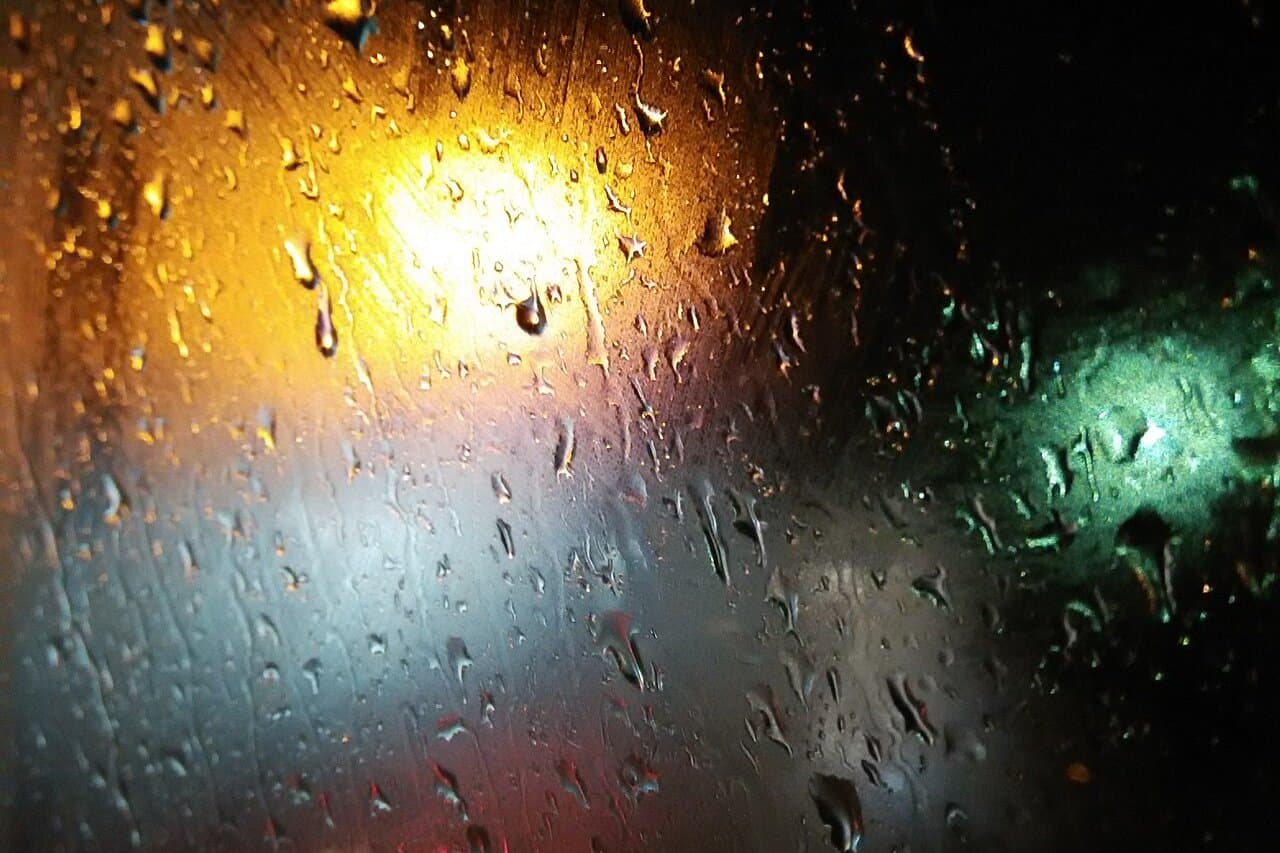
For the whole ride, I sat beside her, watching the streetlights slide across the car window.
Three years earlier, at this same hour, she sat behind me on my motorcycle and I drove her home. Back then, I could only feel her through a faint shivering against the back of my shirt. Tonight neither of us had to hold the wheel. We sat level, shoulder to shoulder, and for the first time I could turn and look straight at that tired face. And still her road did not lead home. It led to a darkened office where people were waiting for her.
The car stopped at the office gate. She opened the door, smiled, waved to us, and walked inside. I watched until she disappeared behind the door. I used to call myself the last one to leave every gathering. That night I understood that some people do not even have the right to leave.
Three years ago, she sat behind me on a motorcycle and I drove her home. Three years later, we sat side by side in a back seat, and the car stopped in front of a darkened office, where people were trusting her more than they trusted their own future.
V. A Road That Glows in the Desert
On the ride home that night, one thought would not leave me.
The situation she was facing, I have to say plainly, was a hardship I believe only she could get through. Yes, it had to be this person, this character. It had to be her.
I tried putting myself in her place. I gave up within the first few steps. I do not have the patience to look every day into the eyes of people working without pay and still keep a smile. I do not have the courage to pour out my own money for others without knowing when it will end. I do not have the endurance to keep a team's fire burning, face my superiors, sleep at the office, and start the next morning as if nothing had happened. If it were me, I would never make it through.
I tried putting other people I know in her place, people more skilled, stronger, more experienced. And I still could not find anyone I believed would make it through, except her.
Not because I believe her ability or talent is greater than anyone else's. Honestly, we are both just ordinary people. Imperfect, with no special gifts, still stumbling, still tired, still having nights when we want to let go.
It is because I could see the road she was walking.
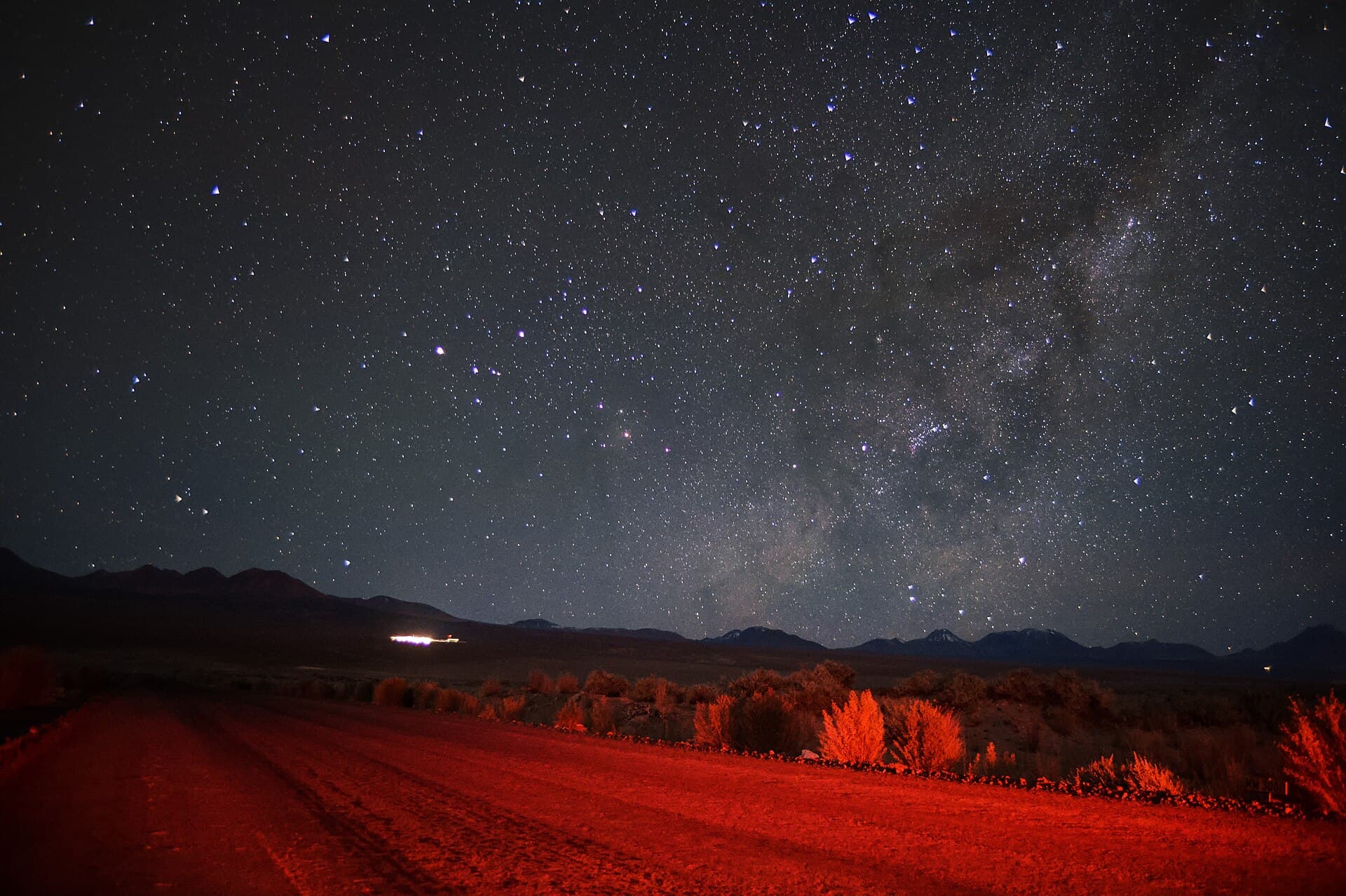
Picture it like this. A desert at night. No moon, only darkness stretching to the horizon. The ground dry and cracked, not a single tree, not a single spring. A cold wind blowing across the sand. Anyone left there would stand frozen, not knowing which way to go, not knowing whether the next step led into nothing. That was her situation: a company about to dissolve, a budget cut to the bone, a team without pay, and one young woman standing in the middle of it all.
But in the middle of that desert, there is a road.
The road glows. Along its edges run reflective markers, catching light from some source we cannot see. The surface is lined with something soft and yielding, so that the feet stepping on it are not burned, not cut by sharp stones, but feel easy and light. The darkness around it is still darkness. The desert is still a desert. But the road is already there, already laid down, already lit.
That is what I saw around her. Her circumstances were hard, yet she seemed sheltered and fully prepared for, so that she herself could walk. A team that trusted her and gave everything, without receiving a single đồng. An environment and people around her who treated her with real kindness. This condition and that condition, one by one, like stones already set beneath her feet. Even the trait I once worried about, her habit of taking everything onto herself, turned out to be the very reason her team was willing to stay.
She did not have to build a road through the desert. The road was already there. She only had to walk it, and have the courage to keep walking to the end.
That is the most vivid way I can describe it. And it is also our faith, hers and mine, two ordinary people who have shared two midnight rides, three years apart.
We believe we have been fully prepared, and that a good plan was drawn up long before us. Not one we sketched ourselves, but one given to us.
I am a person of faith, and that faith is rooted in the Bible. But I know not everyone reading this shares it. So let me tell it in the simplest way I can, the way you would tell a very old story.
Some two and a half thousand years ago, a whole people was carried off into exile in Babylon, separated from their homeland by a vast desert. They had lost their homes, their land, and almost every hope of ever going back. Between where they were and where they belonged lay only a barren stretch that no one believed they could cross. It was then that these words were recorded in the book of the prophet Isaiah, as a promise meant for them:
"Behold, I am doing a new thing; now it springs forth, do you not perceive it? I will make a way in the wilderness and rivers in the desert."
— Isaiah 43:19 (ESV)
What held me on that line for so long is that it never promises the desert will disappear. It does not say the barren land will turn into a green garden overnight. It promises a road, drawn right through the middle of the desert. The circumstances are still hard, the darkness is still there, but the way through already exists.
The second line comes from a letter. Paul, one of the first people to travel far and wide telling others about Jesus, wrote it to a small community of fellow believers in the city of Ephesus, in what is now Turkey:
"For we are his workmanship, created in Christ Jesus for good works, which God prepared beforehand, that we should walk in them."
— Ephesians 2:10 (ESV)
Put simply: each of us is a work made with intention, and the good we are called to do was prepared ahead of time, waiting for us to step into it. And notice the verb. Not build. Not carve out. Walk. Walk along a road that is already there.
If you do not share this faith, you can still read those two lines as a way of seeing life. There are circumstances we never get to choose, barren and dark as a desert at night. But if we look closely, there is often already something holding us up: people who believe in us, conditions we did not create ourselves, hands reaching out at exactly the right moment. Some call it luck. Some call it human kindness. For me, it is a good plan prepared in advance. Whatever name we give it, what is left for each of us to do is the same.
Our task is not to pave the road. Our task is to walk it. To walk to the end, with a quiet heart.
That is why what I felt that night, joy at its very peak and worry that knotted my stomach, was not heavy or dark. A great faith covered all of it, like light rising from the surface of the road itself. I was worried for her, but I was not afraid for her.
Her circumstances were a desert at night. But through that desert ran a road already laid and already lit. She did not need to build it. She only needed the courage to walk it to the end.
VI. Looking for an Explanation
A few days after that evening, I did what I usually do when an experience is too large to only feel: I went looking for what the world had already said about it.
The first question was about me. Three years of silence, all because a trial in my head kept ruling not necessary. It turns out that trial is not mine alone, and it is almost always wrong. Psychologists have measured that people thinking of checking in on an old acquaintance tend to underestimate how much the other person will appreciate it, and the longer they have been out of touch, the more they underestimate it. Reading that, I thought about those three years. Perhaps a random message from me on some evening in between could have been a small light for her, much earlier than the night she finally had to speak up herself.
The second question was about her message. Why had I been so sure that her word tired was not ordinary? Psychologist John Gottman calls remarks like that bids for connection: people rarely say outright what they need, they offer a small signal and wait to see whether anyone turns toward them. Closeness between people, he argues, is built less from grand gestures than from whether we notice those small signals at all.
The third question kept me awake the longest: why would an entire team stay for three months without a single đồng of pay? The answer from leadership research turned out to be very close to what I had seen with my own eyes. When a leader voluntarily sacrifices their own share first, followers do not stay because they are bound. They stay to answer. She was not holding anyone back. She simply laid herself down first, and everyone chose to stand beside her.
And the last question, the one I did not want to ask but had to: what does that road cost? Someone sleeping at the office after midnight, feeding a whole team from her own salary, standing alone between those above and those below. Research has a name for where that road can lead if no one is paying attention. I write it down here, not to frighten anyone, but because faith does not mean closing your eyes.
The Research
A message never sent, a message out of character, and the people who stayed without pay
Three things I witnessed across those three years turn out to have been measured, named and recorded by others. I have gathered them here, along with a fourth that I hope I have misread.
Diagram 1: What we expect reaching out is worth, and what it is
Sender's guess of the recipient's appreciation
How much the recipient actually appreciates it
illustrates the direction of the effect, not the original scale · the gap widens the longer two people have been out of touch
In 2023, Peggy Liu and colleagues published a series of experiments in the Journal of Personality and Social Psychology under a disarmingly plain title: The surprise of reaching out. People asked to check in on an old acquaintance consistently underestimated how much the other person would appreciate it. And the gap between expectation and reality grew wider the more surprising the message was, which is to say, the longer the two had been out of touch.
It is not an isolated finding. Erica Boothby and colleagues (2018) named the liking gap: after a conversation, we reliably believe the other person liked us less than they actually did. Nicholas Epley and Juliana Schroeder (2014) had Chicago commuters strike up conversations with strangers. They predicted it would be awkward and draining; in fact their rides were noticeably more pleasant than those of people who sat in silence. The mind seems to ship with a faulty calculation: it inflates the risk of speaking first and shrinks its worth.
Liu, Rim, Min & Min, “The Surprise of Reaching Out: Appreciated More Than We Think,” JPSP, 124(4) (2023), 754–771. · Boothby, Cooney, Sandstrom & Clark, “The Liking Gap in Conversations,” Psychological Science, 29(11) (2018), 1742–1756. · Epley & Schroeder, “Mistakenly Seeking Solitude,” JEP: General, 143(5) (2014), 1980–1999.
Diagram 2: Turning toward a bid
Still together after 6 years
~86%
Separated
~33%
share of bids for connection that were turned toward
Psychologist John Gottman calls seemingly offhand remarks like “I’ve been so tired lately” bids for connection. The speaker rarely states the need outright. They offer a small signal and wait to see whether the other person turns toward it or lets it slide past. In his long-term study of newlyweds, couples still together six years later had turned toward each other’s bids roughly 86% of the time; couples who had split, about 33%. Gottman stresses that the same holds for friendship: closeness is built less from grand gestures than from noticing the small signals.
Gottman & DeClaire, The Relationship Cure (Crown, 2001). · Gottman Institute, summary of the “Love Lab” research on turning toward.
Diagram 3: Why people stay when the pay stops
01
The leader lays themselves down first
02
Seen as genuine
03
Wish to reciprocate
04
The team stays
Yeon Choi and Renate Mai-Dalton (1999) tested a model they called self-sacrificial leadership: when a leader voluntarily gives up their own benefits, money or safety for the group, followers see them as more trustworthy and more legitimate, and tend to answer with sacrifices of their own. David De Cremer and Daan van Knippenberg (2004) found the same: a leader’s self-sacrifice markedly raises a team’s willingness to cooperate. No one orders anyone to stay. People answer someone who laid themselves down first.
Choi & Mai-Dalton, “The Model of Followers’ Responses to Self-Sacrificial Leadership: An Empirical Test,” Leadership Quarterly, 10(3) (1999), 397–421. · De Cremer & van Knippenberg, “Leader Self-Sacrifice and Leadership Effectiveness,” OBHDP, 95(2) (2004), 140–155.
Diagram 4: The toll of the road, the part I hope I misread
Exhaustion
sleeping at the office, no line left between day and night
Cynicism
when faith in the organization begins to run dry
Reduced efficacy
doing so much and feeling nothing changes
Christina Maslach, who has spent more than forty years studying burnout, describes it along three dimensions: exhaustion, a cynical distance from one’s work, and a sense of no longer being effective. In 2019 the World Health Organization listed burnout in ICD-11 as an occupational phenomenon, tied to chronic workplace stress that has not been successfully managed. Maslach and Michael Leiter point out that it grows not from an individual’s weakness but from a mismatch between person and situation: workload, fairness, reward. Even a prepared road needs the one walking it to sleep.
Maslach & Leiter, “Understanding the Burnout Experience,” World Psychiatry, 15(2) (2016), 103–111. · WHO, ICD-11, code QD85 “Burnout” (2019).
VII. The Next Moment
I often think about those two nights, three years apart, side by side.
On the first night, she sat behind me on my motorcycle, silent, shaking from cold and exhaustion. I wanted to say something encouraging and chose silence instead. When I got home, I wrote a song carrying a simple prayer for both of us: quietly hoping for a brighter morning, a gentler sun.
On the second night, we sat side by side in a back seat, and the car carried her toward a darkened office. And I suddenly realized that the prayer from years ago had been answered in a way I never expected. Morning had come for her. She had her road, people who believed in her, the fruit of years of perseverance. It was only that the sun was not very gentle yet. It was still harsh, still burning, still forcing her to sleep at the office after midnight.
So my prayer is still open, not yet finished. Except now, I no longer want to be only someone who prays from a distance.
In part one of this series, I wrote that I am always the last one to leave every gathering. I thought staying meant lingering in a place, aching over a moment. That night taught me another meaning. Sometimes staying means not letting someone you believe in walk their road in silence.
So I have made myself a promise that is not small for me: I will be the one who knocks first. Next time the familiar trial in my head starts ruling not necessary, I will remember the third phone call at half past eight, the shoulders no longer straight, her figure disappearing behind the office door at half past midnight. And I will send the message. Even a random one. How have you been? Did you get any sleep today?
I cannot walk in her place. That road was prepared for her, and only she can walk it. But I can be one of the small reflective markers along its edge, catching a little light whenever she needs to see that she is still heading the right way.
I still believe she is going to make it. Three years ago I believed it without evidence. Today I have the evidence. And I will keep following that journey, only this time, a little closer.
Tomorrow, the sun will rise over that desert again. The road will still be there, still glowing beneath the feet of the one walking it.
Quietly hoping for a brighter morning, a gentler sun. This time, let that sun be gentle with her.
I cannot walk anyone's prepared road in their place. But I can be a small reflective marker along its edge, and I can be the one who knocks first.

Photos: Carlos A. Durán/ESO (CC BY 4.0); frank mckenna via Unsplash (CC0); Sahilrathod (CC BY-SA 4.0); Bob Wick/Bureau of Land Management (public domain). Source: Wikimedia Commons.
personalnostalgiamoments