PersonalEssay · Choice
I Wish I Could Stay in This Moment Forever 2
Every choice is a sacrifice. And this present is already the best one.
I. The Words in the Corner of the Screen
One ordinary evening, I was playing Life is Strange.
For those who haven't played it: it's a narrative adventure game. You step into the shoes of a girl named Max, and the special thing is that every choice you make, from the smallest line of dialogue to the largest decision, bends the story down a different path. There is no winning or losing. There are only forks in the road.
I had reached a moment that demanded a decision. And as always, in the top corner of the screen a small line of text appeared, next to a butterfly sketched by hand:
This action will have consequences.
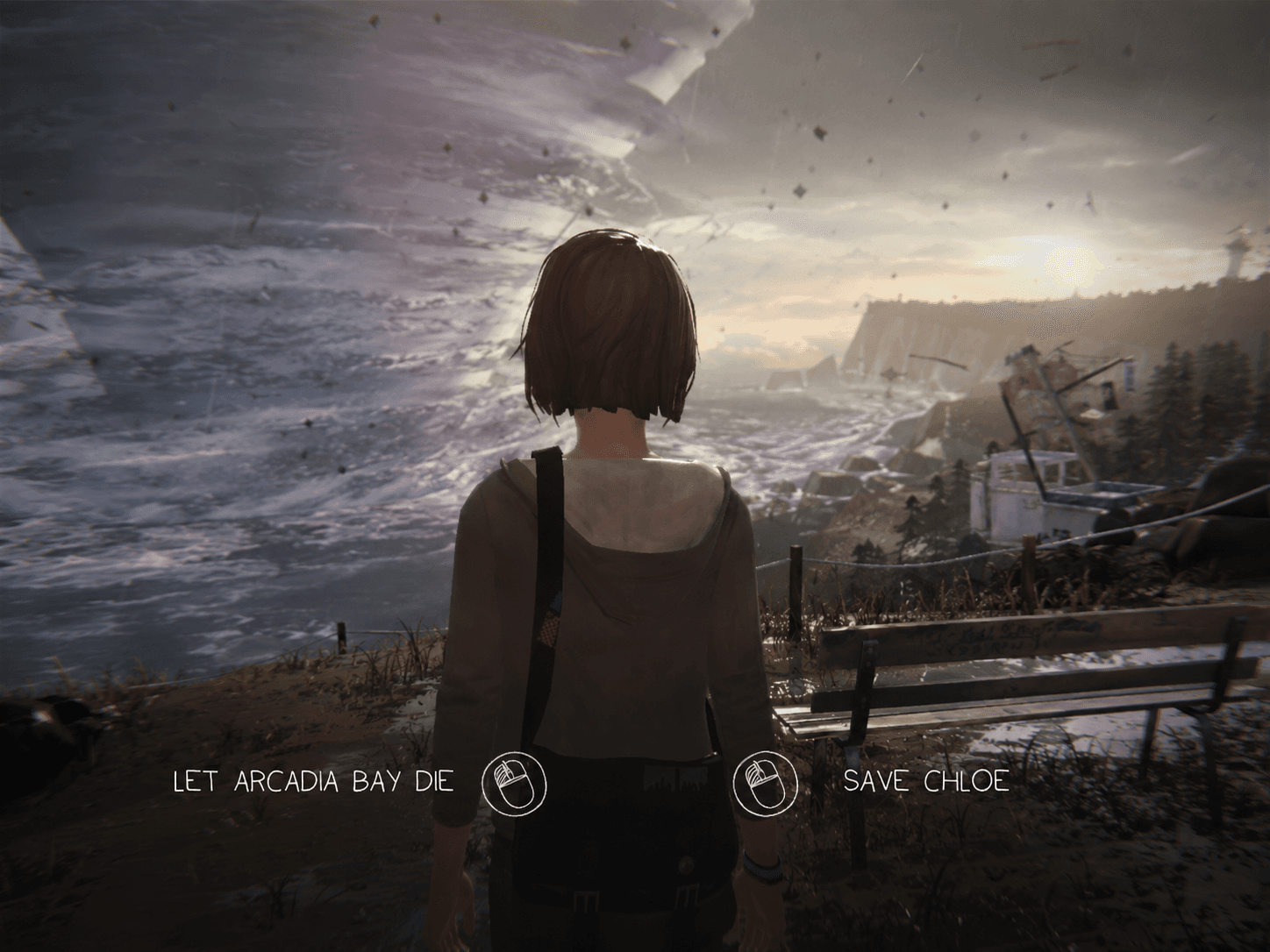
Every time those words surface, I freeze. My hands lift off the keyboard. It isn't quite fear, and it isn't quite guilt. It is something harder to name, a faint unease, as if someone had just whispered in my ear that the door I am about to open will forever close all the others.
The funny thing is, it's only a game. I could quit, replay, pick another path anytime. And yet there I sat, lingering for a long while over a decision that wasn't even real.
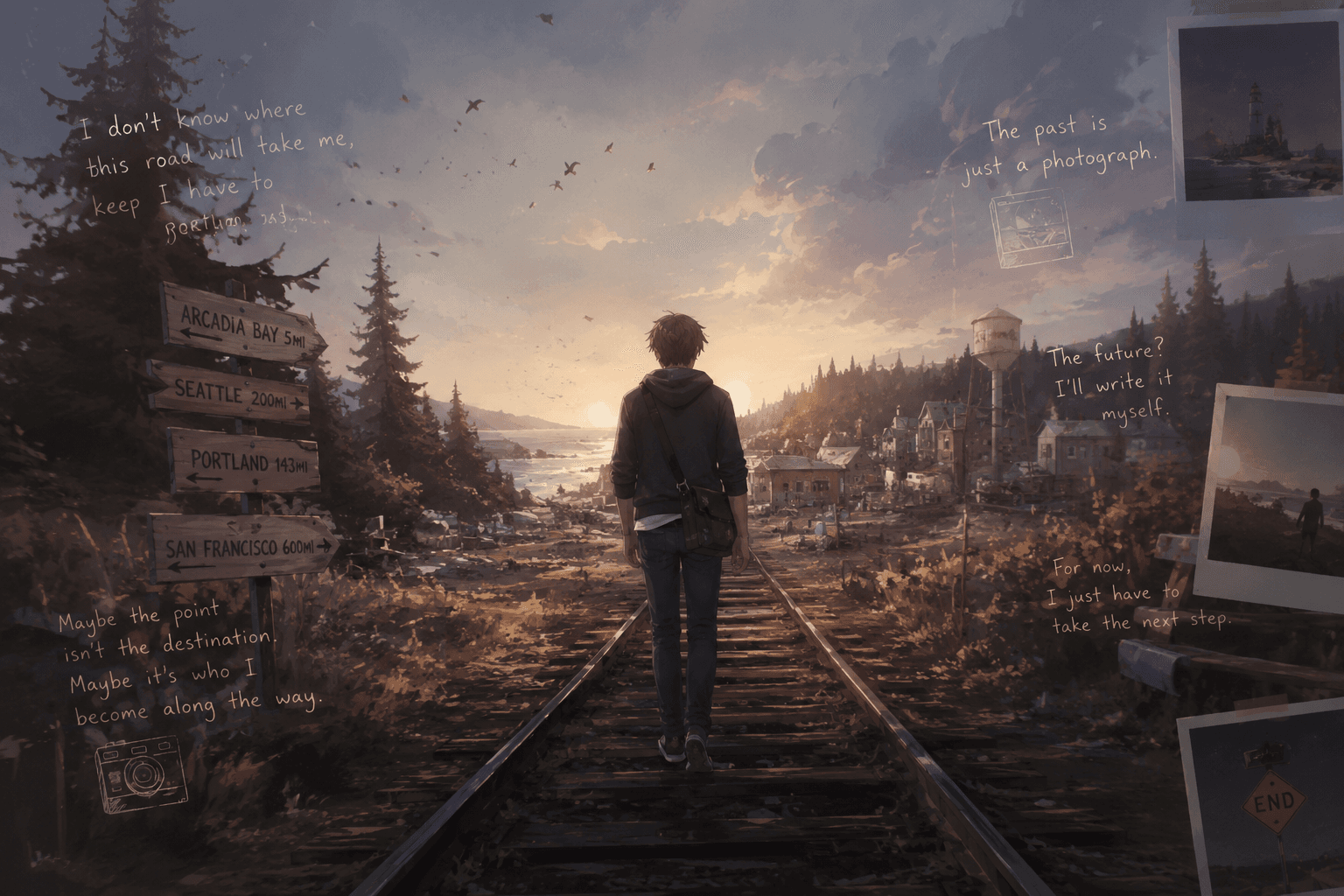
Then I understood why. Because that faint unease, I had met it before, many times, not in a game but in life. Standing between two jobs. Between leaving and staying. Between one person and another. Between speaking and staying silent. Life never has the kindness to hang a warning across our path. But it is always there, quietly, each time we stand at a fork in the road.
And I know that until the day I die, I will meet it many more times.
II. The Trap We Call Regret
There is a very common belief, one I carried for years myself: that among our choices there is always a right answer and a wrong one. And that if we later feel regret, it is proof we chose wrong.
Let me say this plainly: I don't believe that anymore.
Of course, I am not talking about choices that are morally clear-cut. To steal or not to steal is not a fork worth agonizing over. I mean the genuinely hard choices, the kind where both roads have their reasons, both are worthy, and you may take only one.
Life is Strange pushes this to its limit. (If you intend to play it and don't want the ending spoiled, gently skip this paragraph.) In the final minutes, Max must choose: sacrifice the whole town of Arcadia Bay and everyone in it to save Chloe, her closest friend; or sacrifice Chloe herself so the town may live.
Which do you think is the right answer?
I think there isn't one. Whatever you choose, a part of you will bleed for what was lost. Choose Chloe, and you carry the guilt of a town. Choose the town, and you betray the friend you swore to protect. No road lets you walk out clean. What lingers in your heart is not the mark of a wrong decision. It is a sacrifice.
You don't need a game to touch this. There is a classic problem that Professor Michael Sandel uses to open his famous philosophy course at Harvard, the trolley problem. A runaway trolley is hurtling toward five people. You can pull a lever to divert it onto another track, where only one person stands. Would you? Most people say yes. But if saving those five required you to shove a man standing beside you off a footbridge to block the trolley, almost no one would. The same arithmetic, one life for five, yet the heart knows the two are nothing alike.
That is when I understood: what we call regret, economists name more coldly, opportunity cost. It is the price of the road we did not take. And my greatest mistake for years was believing that price was the verdict on my decision.
The ache for the road not taken is not a court. It is an invoice. And every road worth walking has its price.
III. Searching for a Framework to Choose Right
For a while I believed my problem was a lack of tools.
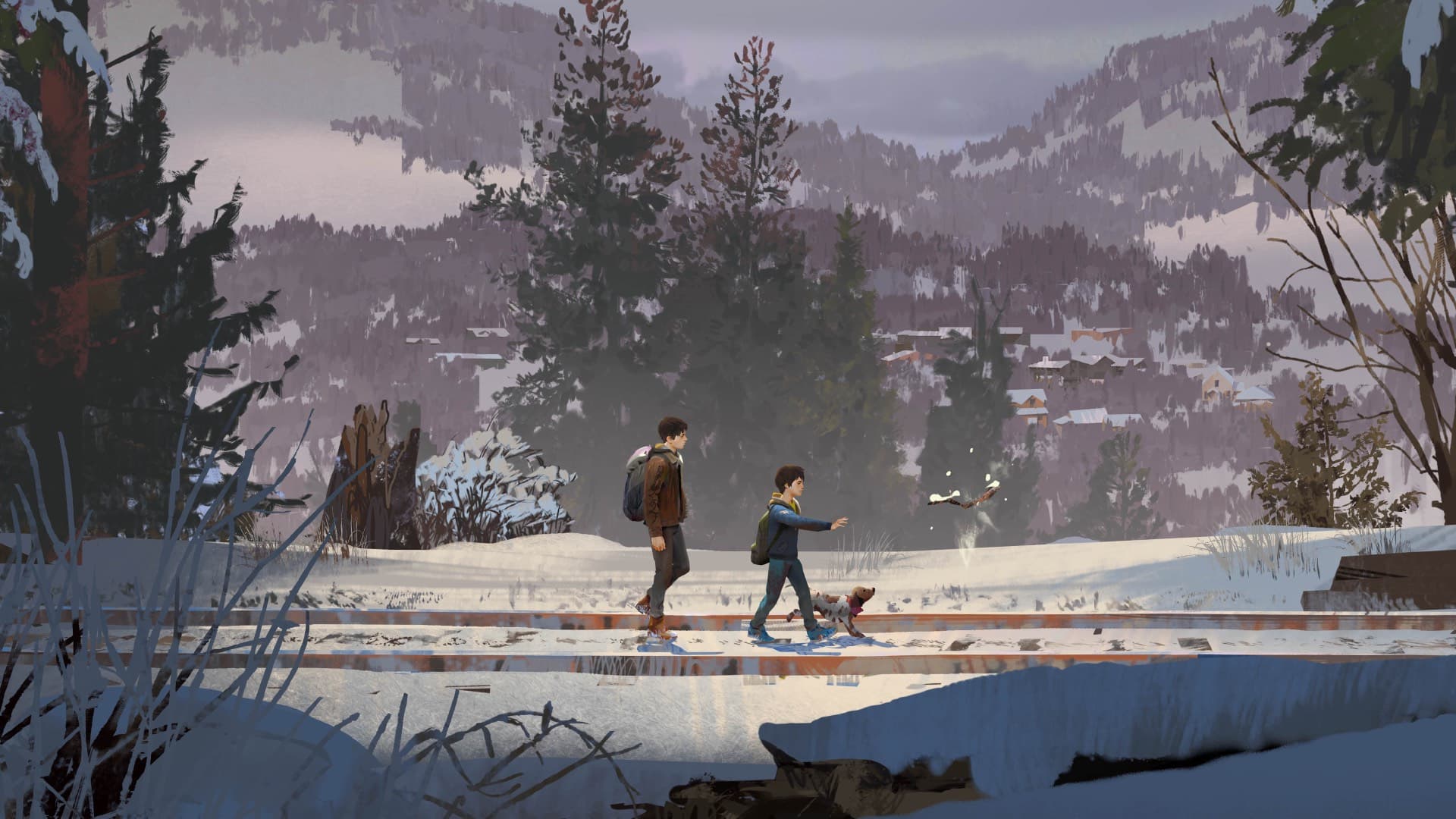
I went hunting for decision frameworks. Pro-and-con tables. Scoring each option. Reading how successful people make their calls. I thought that if I were lucid enough, informed enough, methodical enough, I would find the right road and escape that faint unease forever.
But the more I searched, the more I met an ironic truth. For nearly a century, brilliant philosophers, economists, and psychologists had been chasing the very same question. And what they found was not a formula to end hesitation. It was something far gentler, and far more freeing.
I want to walk you through what they discovered. Not to show off, but because the first time I read it, I felt a relief so deep I nearly cried. It turned out the feeling I couldn't name was not a weakness. It has a name, a history, and even numbers.
I went looking for a framework to choose right. What I found was permission to stop punishing myself for having chosen.
The Research
Is there really a way to choose the 'right' path?
I used to believe that if I were lucid enough, informed enough, armed with enough frameworks, I would find the right answer for every fork in the road. It turns out that for nearly a century, philosophers, economists, and psychologists have been chasing the same question. And what they found is not a formula that ends hesitation, but something far gentler.
Chart 1: The Problem With No Clean Answer
Two ways of moral reasoning
Consequentialism judges an act by its outcome: saving five is worth more than saving one. Deontology holds that some acts are wrong in themselves no matter the outcome, such as using a person merely as a means to save others.
In 1967, philosopher Philippa Foot built the trolley problem; Judith Jarvis Thomson later added the classic variants, and Michael Sandel carried it into the Harvard lecture hall. A runaway trolley is hurtling forward. Do you pull the lever to divert it?
The arithmetic is identical: one life for five. But when it only takes pulling a lever, about 89% say you should. When you must push a man off a footbridge to stop the trolley, the exact same one-for-five, only 11% agree. Same math, opposite answers.
The philosopher Bernard Williams named what lingers after such a decision: a moral remainder. Even when you choose rightly, having weighed every path, a residue remains, a grief for what you had to give up. That is not proof you chose wrong. It is the real price of having to choose at all.
Foot (1967), “The Problem of Abortion and the Doctrine of the Double Effect.” · Thomson (1976; 1985). · Sandel, Justice (2009). · Williams, Utilitarianism: For and Against (1973). · Lever/footbridge split: Hauser, Cushman, Young et al. (2007), n=2,646 (varies by sample).
Chart 2: What We Regret, and When
Counterfactual thinking
This is when the mind builds an “if only” reality. Psychologist Neal Roese distinguishes upward counterfactuals (if only I had chosen otherwise, it would have been better), which breed regret, from downward counterfactuals (thank goodness I didn't), which breed relief. The easier the “if only” is to imagine, the stronger the feeling.
In 1994, Thomas Gilovich and Victoria Medvec found a strange rule about time. Just after a decision, we most regret the things we did. But looking back over a whole life, what haunts us most are the things we never dared to do.
Short term
right after
Long term
over a lifetime
Why? Because what we did has concrete consequences; we can console ourselves, find the silver lining. But what we didn't do stays open forever; the road not taken is endlessly beautiful in the imagination. That is opportunity cost wearing the face of emotion.
Gilovich & Medvec (1994, n=32; 1995 synthesis, Psychological Review). · Roese (1997). · Caveat: a 2023 replication (n=2,600) confirmed the short-term action bias but found the long-term inaction gap much smaller (~51% vs 49%).
Chart 3: More Options, Less Peace
In 2000, Sheena Iyengar and Mark Lepper set up a jam-tasting booth in a grocery store. With 24 jams, a bigger crowd gathered. But with only 6 jams, the share who actually bought was roughly ten times higher.
Stopped to look
Actually bought
Percentages are within each display group; these are descriptive results from the jam study and do not by themselves establish causation.
Barry Schwartz calls this the paradox of choice. The more roads there are, the more we are haunted by the ones we didn't take. People who always hunt for the “best” option (maximizers) tend to feel more regret and less satisfaction than those who settle for “good enough” (satisficers), even when their outcomes are objectively better.
Iyengar & Lepper (2000), JPSP 79(6). · Schwartz, The Paradox of Choice (2004). · Honest caveat: the choice-overload effect is contested; meta-analyses (Scheibehenne 2010; Chernev 2015) find it holds only under specific conditions.
Chart 4: The Pain We Fear Is Bigger Than the Pain We Feel
The psychological immune system
Daniel Gilbert and Timothy Wilson showed that humans suffer from impact bias: we overestimate both the intensity and the duration of future pain. The reason is that we forget we have a “psychological immune system,” a quiet machinery that heals, finds meaning, and adapts, so we recover far faster than we predicted.
They asked people to predict how happy they would be after a loss, then measured their actual happiness later. The gap repeated itself:
happiness scale 1–7
Denied tenure, a breakup, your candidate losing the election: in every case people recovered far above what they feared. Most of life's big blows, after a few months, barely move our baseline happiness at all.
Gilbert, Pinel, Wilson, Blumberg & Wheatley (1998), “Immune Neglect,” JPSP 75(3). · Wilson et al. (2000), “Focalism.” · Happiness on a 1–7 scale.
Chart 5: Affirming the Present Is NOT Fatalism
This is the part I want to make clear. The four views below sit on a spectrum, from “your choices change nothing” to “your choices are everything.” Only one of them says your effort is meaningless.
Fatalism says: the ending is fixed, so nothing you do matters. My stance, and this essay's, sits at the far other end. Nietzsche called it amor fati, love of fate: not resignation, but an active embrace of what is, turning it beautiful. Viktor Frankl called it tragic optimism: saying “yes” to life in spite of suffering, by choosing your own attitude toward it.
The crucial difference: the fatalist and the lover of fate share only the word “acceptance.” But one accepts out of helplessness, the other accepts alongside action. The fatalist crosses the street without looking, because “if it's my time, dodging won't save me.” I still look both ways, then step, then love the road I am on.
Fatalism vs determinism: naturalism.org. · Compatibilism: Hume; Dennett, Elbow Room / Freedom Evolves. · Sartre, Existentialism is a Humanism (1946). · Nietzsche, The Gay Science §276 (1882); Ecce Homo. · Frankl, “The Case for a Tragic Optimism” (1984).
★ My Own View
After all of it, I gather everything into two pillars
1. Regret = sacrifice, not a mistake
The moral remainder (Williams) shows even the right choice leaves a mark. Inaction-regret lingers because the other road stays open. It is opportunity cost, the price of having loved, not evidence of error.
2. The present = the best, not fated
We always exaggerate future pain (Gilbert), and the mind quietly heals. The road not taken would not have been paradise either. Trusting the present as best is an active act, not surrender.
The evidence: what you won and what you lost differ less than you think
present-happiness scale 0–5 (midpoint 2.5)
A year later, jackpot lottery winners (4.00) were barely happier than ordinary people (3.82); people paralyzed in an accident (2.96) still lived above the midpoint of the scale, and even expected the highest future happiness of all three groups. What you long to gain will not become paradise; what you fear to lose will not become hell.
And here is the piece I love most: people are more satisfied with irreversible decisions than reversible ones (Gilbert & Ebert, 2002). Yet 66% of us still choose to keep an escape route. It is the open door back to the road not taken that poisons the present. Only when you truly close it and commit fully to your choice does the heart settle.
Brickman, Coates & Janoff-Bulman (1978), “Lottery Winners and Accident Victims,” JPSP 36(8); present-happiness, 0–5 scale. · Gilbert & Ebert (2002), JPSP 82(4). · Gilbert, “synthetic happiness” (TED 2004).
IV. But This Is Not Fatalism
Here I need to pause and draw a line, because without it, this is easy to misread.
When I say the present you are living is already the best development, I am not saying everything was predestined, that fate wrote the script and you are only a pawn. That is fatalism, and I do not believe in it.
The difference lies right here, and it matters so much that I want to say it slowly. The fatalist and the one who loves their fate can look alike, because both accept reality. But one accepts out of a sense of helplessness, while the other accepts while still acting with everything they have. The fatalist crosses the street without looking, because they think when your time comes, dodging is useless. I still look both ways carefully, still weigh things, still choose with all the seriousness I have. And only after choosing do I turn back to love the road I am on.
The philosopher Nietzsche had a phrase I love, amor fati, the love of fate. He didn't tell us to resign ourselves. He told us to actively embrace what is, not merely to endure it, but to make it beautiful. Viktor Frankl, who survived the Nazi concentration camps, called this spirit tragic optimism: daring to say yes to life even in the midst of suffering, by choosing your own attitude toward what you cannot change.
Do you see? Both turn on the word choose. Fatalism erases choice. What I am describing puts choice at the center. I believe your choices are real, that they matter, that they are yours. I simply don't believe their worth is measured by whether you feel regret afterward.
The conviction that the present is already the best, then, is not a lullaby. It is a decision. A brave act you perform every morning when you wake.
Fatalism says: nothing you do will matter. I say: precisely because what you do matters, love what it has woven.
V. The Next Moment
I went back to the game screen that night.
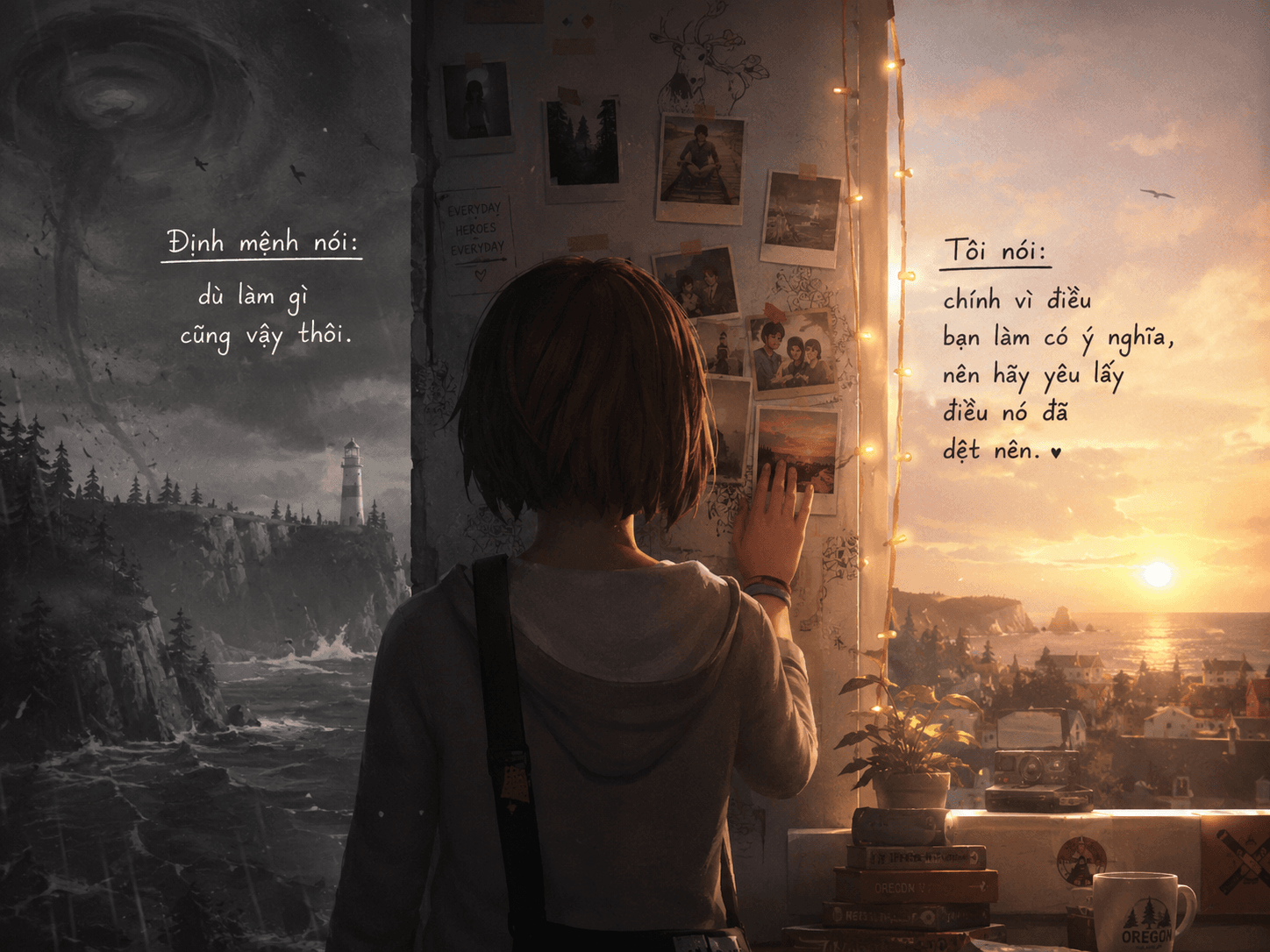
In the end I clicked my choice. The words This action will have consequences faded, the story flowed on in the direction I had just decided, and another door closed forever. I sat still for a while. This time, the faint unease was still there, but it no longer frightened me.
Because I understood what it was now. It is the thread that ties me to the road I did not take. And that thread does not wish to accuse me. It is only saying that the other road was beautiful too, worthy too, so much so that losing it was enough to make my heart sink. In other words, it is the shadow of something I once loved.
In my earlier essay, I came to see that regret is not the enemy of joy, but proof that we loved deeply enough. Now I want to add one thing, for the larger choices of a life: regret is not the enemy of a decision either. It is the price we willingly pay to live a life with depth, a life where every fork in the road truly means something.
So I make myself this promise.
I will still choose with all the clarity and kindness I have. I will still look both ways carefully before I step. But once I have stepped, I will stop turning back to torment myself over the other road. I will believe, actively and bravely, that the reality I am living is not the leftover scraps of a mistake, but the best development I have been given. I will close the door behind me, not because it wasn't beautiful, but because only by closing it can I fully love the room I am standing in.
Tomorrow, more words will appear in the corner of the screen of my life. There will be more butterflies. And I will choose again, and sacrifice again, and love again.
Quietly hoping for a brighter morning, a gentler sun.
Every choice is a sacrifice. But do not look back at where you never went and call your present a hell. Believe me, the place where you stand is already the best one.
personal